
Forced to witness the murder of his parents at the tender age of seven, Bruce Wayne vowed to protect Gotham City so that never would another have to suffer like him. A hardened vigilante trained in every single martial art known to man; armed with a custom-made Kevlar armor, gadgets, an utility belt and a strategic mind prepped to calculate contingency plans for any possible situation, Batman has waged a crusade to safeguard innocents and deliver criminals to justice. However, there is one thing he won't do in his mission to defend Gotham: Kill.
The Batman franchise has extended itself reaching multiple media outlets producing TV shows, an animated series, video games, comic books and movies each presenting the Caped Crusader in an exclusive light of its own but always retaining a central foundation of moral values revolving around the theme of justice. Batman is justice.
Regardless of the opponent he is facing, whether it be the maniacal Joker or the demented Scarecrow, Batman has forever remained true to his word to never kill, believing every human being, no matter how twisted, how far beyond salvage, deserves a chance to plead at a fair trial, a chance at receiving salvation. Case in point:

Even after all that Joker has done to cause death and destruction, Batman still believed he deserved a chance and he wanted to help, to dig into the Joker's psyche, claw out whatever sanity that maybe left in him to try to save him. Nonetheless, Joker refused. We do not know why, but he refused. Yet, Batman wanted to help.
Embittered by the chaos and violence constantly barraging his life, Bruce Wayne has seen it all and it is a mystery how he has managed to hang on to any sense of normalcy without being driven a deranged, raving lunatic. However, regardless of the modality, the fact of the matter is that he has maintained to preserve his mind and use it for the good of others. And that is the core goal of Batman: fight for the good others, whether they be evil or righteous.
This philosophy is nowhere more pronounced than throughout the plot of the Batman video game, Arkham City.

The story of the video game revolves around the eponymous Arkham City, close to a year after the events of the previous game, Arkham Asylum. Following the events of the preceding title, Quincy Sharpe, formerly the warden of Arkham Asylum, hands over the ownership of his institution to Hugo Strange who then proceeds to expand it over a portion of Old Gotham barricading it off from the main city. The ramifications are absolutely disastrous.

With no supervision, the criminals of Gotham are set loose to roam the decrepit streets of Old Gotham raging war against one another as Arkham City boils into a free-for-all turf-brawl between the fat slugs of Gotham's underbelly: mobster mastermind, Oswald "The Penguin" Cobblepot, fallen tragic hero, Harvey "Two-Face" Dent and unhinged anarchist, the Joker. It is pure and raw pandemonium as Hell descends on Earth leashed only by a flimsy wall, pegged to crumble down any minute, from the helpless, oblivious citizens of Gotham.

The game opens with a cut-scene of Bruce Wayne standing outside the gates of Arkham City protesting against the institution and rallying for the closure of it. Minutes later, he is attacked by TYGER guards and imprisoned within the same complex he was protesting against merely moments ago.
_07.jpg)
Following the capture, Bruce Wayne is greeted by Hugo Strange who reveals that he knows the former's secret identity along with the ominous declaration that something called Protocol 10 is going to make him famous. After this, the psychiatrist leaves and Bruce hatches his plot to escape, stealing a chip from one of the TYGER guard's communication radios in the process. He is swiftly intercepted and forced to enter through the gates of Arkham City into the main body of the prison where he is rudely welcomed by Cobblepot.

After a brief altercation, Bruce takes out all of Penguin's thugs and calls in Alfred to send in his Batsuit on top of the Ace Chemicals building within Arkham. Following the suit-up, Batman heads to the abandoned courthouse where Two-Face has Catwoman hostage.

Rescuing the latter from the disgraced District Attorney, Batman questions her about Protocol 10. She doesn't know. The rendezvous is interrupted by a bullet aimed at the thief, missing the mark.

Batman tracks down the location from where the bullet was fired using its trajectory and investigates the gun which was being remotely controlled by none other than... the Joker.

The Caped Crusader manages to track down the Clown Prince of Crime down to his hideout at the Sionis Steel Mill but he is soon taken captive, bound and injected with Joker's blood which, he soon learns, is toxic due to overdosing on the TITAN drug a year ago at the Asylum. Joker asks Batman to help him find a cure or else they both will die, along with the rest of Gotham who have also been poisoned thanks to Harley Quinn shipping samples of Joker's blood to all of the city's hospitals.

Joker informs Batman that he tasked Mr. Freeze to make the antidote for the TITAN drug but he has gone missing since. He pleads Batman to find him and acquire the cure. Batman learns Mr. Freeze, unfortunately, is under the custody of the Penguin. The Caped Crusader then goes on to seek out the mob boss who has taken over the old Gotham Museum as his base of operations.

Batman rescues Freeze from the hands of the Penguin but is soon told by the cryogenic doctor that the cure for the TITAN drug is too unstable and will break down inside the human body without the help of an enzyme which the cowled detective identifies as one found in the blood of Ra's al-Ghul, head of the League of Assassins.

Batman tracks down the bio-terrorist hiding deep within the bowels of Arkham City underneath the ruins of the ancient Wonder Tower. There, Ra's offers to give Batman his blood at one cost: Batman must take his life. Naturally, the latter refuses and the two engage in battle which ends in the Caped Crusader's favor who succeeds in pacifying the Grandmaster Assassin without killing him. The detective returns to Freeze with the blood sample.
Mr. Freeze manages to concoct the cure to the TITAN drug successfully but refuses to hand it over to Batman revealing that Nora, his wife, has been kidnapped by the Joker's men. He asks Batman to return his wife to him if he wants the antidote. Batman does not have time for negotiations. The two initiate battle.

Batman proceeds to take down Mr. Freeze but by the time he is done with him, Harley Quinn has managed to steal the antidote for the TITAN drug and is on her way to the Sionis Steel Mill. The Caped Crusader takes pursuit.
Upon reaching the Steel Mill, Batman comes face-to-face with a rejuvenated Joker all ready for a final showdown. The latter calls forth a horde of thugs and a fight ensues.

Batman deftly sweeps through Joker's hooligans eventually leaving only himself and the Clown Prince of Crime behind. The two clash forces and the Caped Crusader comes out on top. However, just as he is about to land the finishing blow, Protocol 10 begins.
Protocol 10 turns out to be a plan to destroy Arkham City with all the captives locked up within it. Hugo Strange plotted the operation to eradicate every single criminal of Gotham along with any enemies he has locked up within the compound as political prisoners.
Arkham City is bombarded with missiles from choppers and Batman is pinned down under debris as Joker taunts to kill the detective once and for all until he is stopped by Talia al Ghul, daughter of Ra's al Ghul. She offers the Joker a trip to the Lazarus Pit in exchange for him to let Batman go. He agrees but before the two leaves, Talia signals to a GPS tracker implanted on her body to let Batman know how to find her. Batman blacks out.

Batman wakes up to Catwoman removing the debris off him.

She lends him a hand and the Caped Crusader manages to get up on his feet to witness the unfolding of Protocol 10.

Arkham City is burning. TYGER choppers have blanketed the decaying urban landscape with bombs and rockets ripping and blasting the city bit by bit. Batman watches on as he has a decision to make: save Talia from the hands of the Joker or save Arkham. Obviously, at this point, anyone would go for the former and leave Arkham City to smolder into ruins. Why care for a necropolis of criminals? Well, it seems Batman didn't quite get the memo.
After a brief debate with Alfred as to what should be the best course of action, Batman decides upon the latter, heading to Wonder Tower to stop Hugo Strange and his Protocol 10. But why save the lives of those who never cared for the sanctity of another? Because he is Batman.
Throughout the entire length of the game, we now realize, that Batman has been endeavoring not only to find the cure to Joker's disease and save him but also Arkham City: a hellhole of scum and filth. And he succeeds too, eventually managing to rescue Talia as well only to watch her die as Joker shoots her in the spine and reveals his plot: Clayface has been masquerading as the Joker all night while the real Joker was hiding at the Monarch Theatre.

After a battle against the monster of mush, the Batman and the Joker find themselves underneath the subterranean levels of the theater where the Joker fails to resist the urge to back-stab Batman one more time consequently causing Batman to drop the vial of cure containing Joker's half of the potion shattering upon contact with the concrete.
Joker scampers towards the crumbled shards of glass to scoop up any measly drops of the medicine he could find but to no avail. The cure was long gone. Joker was going to die. And in his final moments, the Clown Prince of Crime and the Dark Knight share one last dialogue,
The Joker:
Quick, the cure! What are you waiting for?Batman:
Come on! I killed your girlfriend, poisoned Gotham, and hell, it's not even breakfast.
But so what? We all know you'll save me.
Every decision you've ever made ends in death and misery.The Joker:
People die. I stop you. You'll just break out and do it again.
Think of it as a running gag... Nooooo!Batman:
Are you happy now?
You want to know something funny?The Joker:
Even after everything you've done... I would have saved you.
That actually is... pretty funny...

Batman has always been a symbol of a justice but oftentimes he has been more than that. He has been many a times been an icon of hope, even for the belly-crawlers and vermin of society. He has been an icon of mercy, always willing to forgive and forget, to give them another chance.

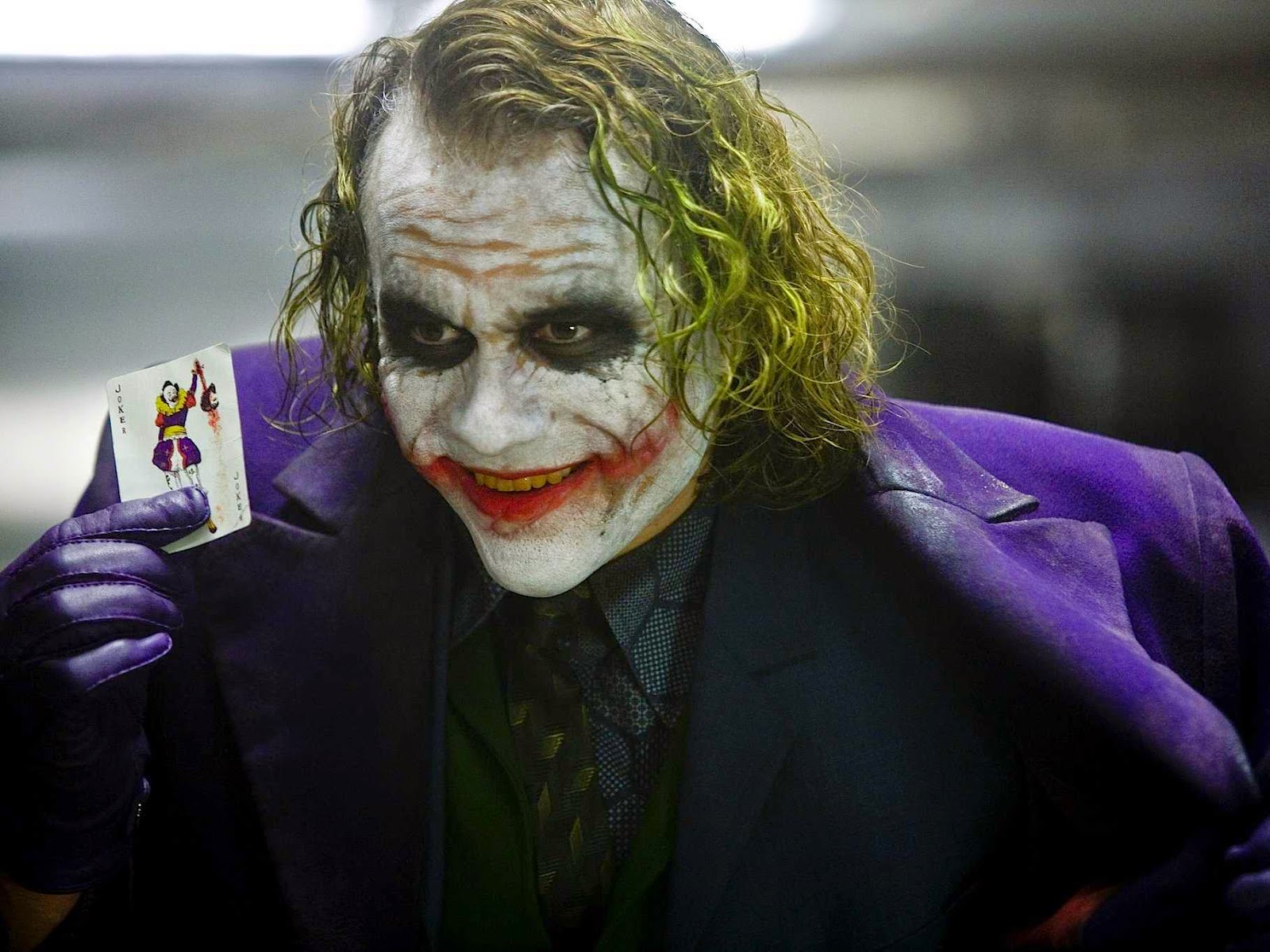
In Christopher Nolan's epic Dark Knight Trilogy we see the eponymous Dark Knight save the Joker after a trouncing in the ending segment of the second movie even after the latter had been directly responsible for the death of the love of his life, consequences of which had the Watchful Guardian of Gotham retire into oblivion for the next eight years, drowning in everlasting sorrow and depression. Yet, regardless of that, when the time came to avenge her demise, Batman opted rather to save the Joker's life and, in the process, save his own soul from descending into the darkness of the Joker's world. It is perhaps as a plaudits to this that the Joker offers his final few lines of the movie:
Oh, you. You just couldn't let me go, could you? This is what happens when an unstoppable force meets an immovable object. You truly are incorruptible, aren't you?
You won't kill me out of some misplaced sense of self-righteousness.
And I won't kill you because you're just too much fun.
I think you and I are destined to do this forever.
And such is the morality of the Batman. He will never kill. He will never seek revenge. Only justice. His crusade against the demons of Gotham is a crusade to save the city and its people, not punish them. Every criminal of the city, every thug, every scum, to him, is a victim of the darkness that seeps through the city, not an active agent of it. And he is their savior. This is the promise he has made, as he walks the line between good and evil, that justice shall be served and not revenge. This thin line that he tiptoes delicately day after day and night after night has been made manifest by the voice of reason and sanity offered by Rachel Dawes early within the Nolan-verse movie that kicked off the franchise, "Batman Begins" when the deputy district attorney tells her seething friend Bruce Wayne who had appeared at the hearing of Joe Chill, the murderer of his parents, with a gun to exact justice that such is not justice. Such, as what Bruce was about to do, was revenge. After the death of Chill as decreed by Falcone, the two speak,
Rachel Dawes:
The DA couldn't understand why Judge Faden insisted on making the hearing public. Falcone paid him off to get Chill out in the open.Bruce Wayne:
Maybe I should be thanking them.Rachel Dawes:
You don't mean that.Bruce Wayne:
What if I do Rachel? My parents deserved justice.Rachel Dawes:
You're not talking about justice. You're talking about revenge.Bruce Wayne:
Sometimes they're the same.Rachel Dawes:
No, they're never the same, Bruce. Justice is about harmony. Revenge is about you making yourself feel better. Which is why we have an impartial system.Bruce Wayne:
Your system is broken.Rachel Dawes:
You care about justice? Look beyond your own pain, Bruce. This city is rotting.
People talk about the depression as if its history, and it's not.Things are worse than ever down here. Falcone floods our streets with crime and drugs, preying on the desperate, creating new Joe Chills every day. Falcone may not have killed your parents Bruce, but he's destroying everything they stood for.You wanna thank him for that, here you go. We all know where to find him, but as long as he keeps the bad people rich and the good people scared no one will touch him.
Good people like your parents who will stand against injustice, they're gone.
What chance does Gotham have when the good people do nothing?
Bruce Wayne:
I'm not one of your good people, Rachel.Rachel Dawes:
What do you mean?Bruce Wayne:
All these years I wanted to kill him. Now I can't.Rachel Dawes:
Your father would be ashamed of you.

Batman ensures that his crusade is always about setting things right for the people of Gotham and not for himself. Every strike, every blow is a measure of justice, not revenge. A tale of Imam Ali from Fadhail-e-A'mal comes to mind:
In the battle of Khandaq, the Muslims dug a ditch around themselves for their defense, so that the enemy could not get across. A man from the enemy side called Amr ibn Abdul-Wud, who was known for his strength, courage and proficiency in martial arts managed to get across the ditch. All the Muslims were terrified to fight him except the valiant Imam Ali came forward to fight this man.
There was a fierce fight until at last Imam Ali threw Amr down onto the ground and mounted his chest ready to kill him. Just as Imam Ali was about to kill this enemy of Islam, he spat on the face of the Imam.
Everybody was certain that because of this insult, Amr would meet his death even faster still, but to their amazement, Imam Ali moved from Amr’s chest and walked away. Amr attacked the Imam again and after a short while, Imam Ali, once more, overpowered Amr and killed him.
After the battle was over people asked Imam Ali the reason why he had spared Amr’s life when he had first overpowered him to which the Imam replied that if he had killed him then it would have not been purely and solely for the Sake of God but also for the satisfaction of his anger and so he let him free. Then the Imam controlled his anger and killed Amr purely for the Sake of God. Such was the virtue of the exalted Imam-e-Murtaza Ali ibn Abi Talib.

Similarly, Batman, too, seeks to deliver every hit for the sake of justice and solely justice. Never revenge. And if the time ever comes that this were to be untrue, Batman would cease to be Batman and the night that overcasts Gotham would never fade away. What is it then that keeps the Watchful Guardian from transforming into a Vengeful Warlord?
I don't know. Perhaps it is what he has seen within the shadows of malevolence. Perhaps, while tiptoeing the line between good and evil, he has realized that the two sides are not very different. Perhaps he knows that if he were to mete out harshness towards the critters of the dark side, he would have to exact the same judgment upon himself because, at the end of the day, pun intended, the dawn and the dusk may perhaps be one and the same.
Batman knows that he is not very different from the ones whom he fights. The criminals, the gangbangers, all victims of a corrupt system. Perhaps something happened in their lives that caused them to snap just like him. He knows he was not far from being the same when he sat by the corpses of his parents at Crime Alley. Perhaps he did snap? Perhaps his insanity and obsession just happened to be for the good of the denizens of Gotham by chance? I mean, what else would you call a man in a suit resembling a giant bat parkouring from rooftop to rooftop beating up thugs with his bare hands other than a raving lunatic? It is perhaps by a merciful twist of fate that this insane knight of the dark stands and fights amid the angels of light.

— Fahim Ferdous Kibria


.jpg)


.gif)

