Showing posts with label Fahim Ferdous Kibria. Show all posts

Tuesday, October 31, 2017

Change, My Dear, and It Seems Not a Moment Too Soon!

My beliefs, for the most part, are no longer in alignment with the views expressed in this blog.
Should your curiosity urge you to scroll any further downward, please do keep that in mind.


— Fahim Ferdous Kibria
Wednesday, April 1, 2015

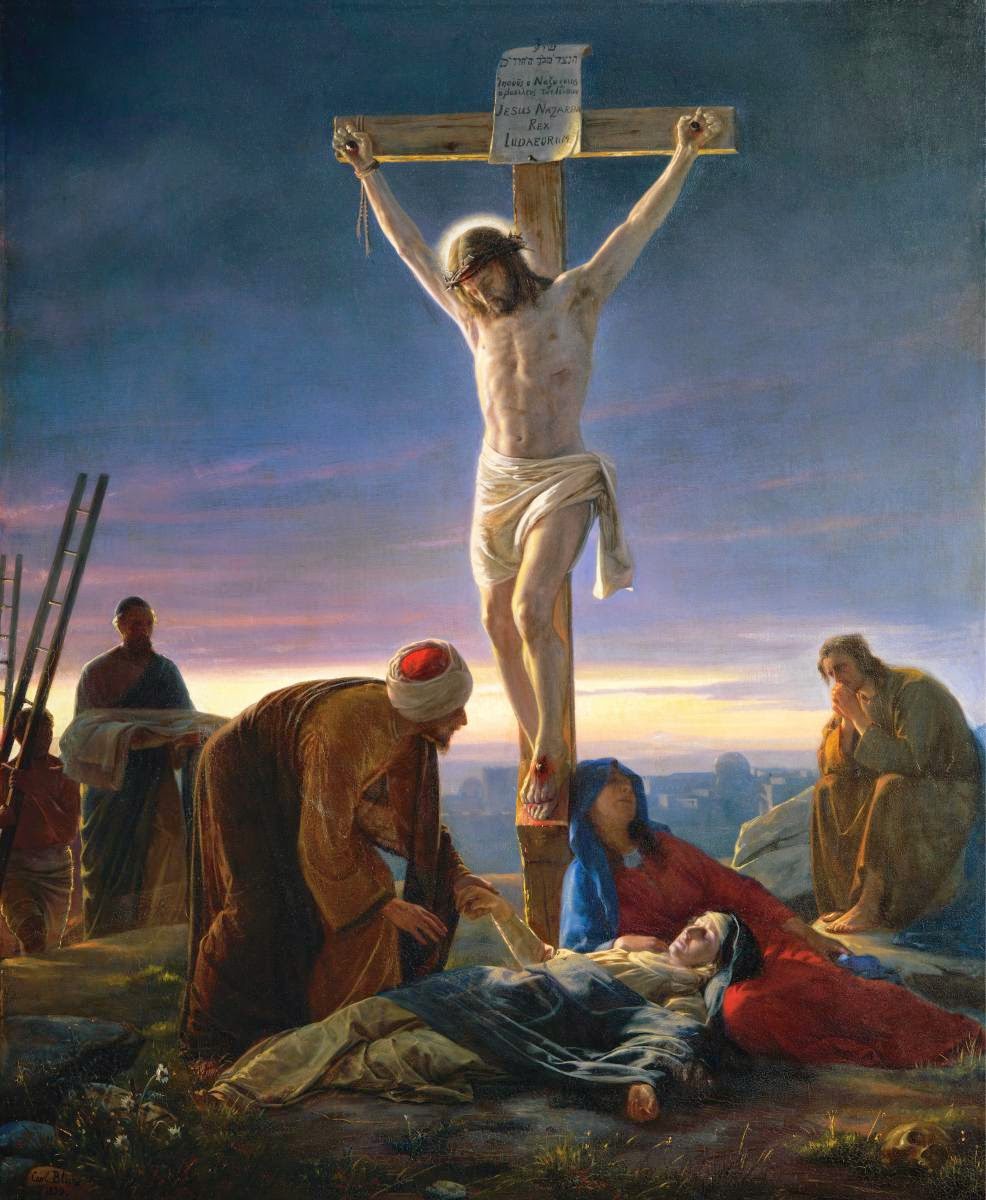
Essentials of Christianity — Salvation by the Cross


The following is an essay I penned for my Religions of the Western World class taken under Rutgers University conducted by Professor James Pavlin. I'd like to present this forth as my Easter present to the world. Peace!

The Christian view of Atonement and Salvation is strongly linked to the concept of Original Sin and Sacrifice. Christians believe every sin is equal in the eyes of God. And God is Pure and Divine. So in order to reconcile oneself with God, he or she must cleanse himself or herself of all sins for any sin, even something as minute as a lie taints the soul and the soul then becomes turned away from God and His Grace.

This is where the earlier Jewish view of repentance through sacrifice comes in. The early Jews used to sacrifice cattle at the Temple of God in order to be forgiven by God and saved. But Christians believe that human beings are inherently tainted by sin from birth due to the actions of Adam and Eve. The act of disobedience performed by them in the Garden of Eden was so profound and deep that it cut into the souls of all their children. We are all tainted, as the Book of Romans, Chapter 3, Verse 10 tells us:
"As it is written, there is none righteous, no, not one."
And the Stature of God is indeed much too great to tolerate this, as the Book of Romans also tells us, this time in Chapter 3, Verse 23:
"For all have sinned, and come short of the Glory of God.

Due to the stain of the Original Sin imprinted upon the souls of all mankind as per the consequences of the action of Adam and Eve, no amount of good deeds such as prayer, fasting or charity can save mankind nor will the meticulous following of the Law because Christians believe that the Law is beyond human limitations to fulfill, for the Law demands that which we as humans cannot do.

"You shall be holy, as I the Lord your God am holy" is the impossible demand of the Law. In other words, humans cannot attain salvation by themselves. Verse 6 from Chapter 64 of the Book of Isaiah is used to explain this:
"But we are all as an unclean thing, and all our righteousness are as filthy rags."

Therefore, in order to pay the wager for the Original Sin, a perfect sacrifice was required to attain God's Grace for us. The idea of the sacrifice to be forgiven of sin comes from the Jewish tradition of sacrificing cattle, in most cases, a lamb, for repentance. So God, in His Infinite Mercy and Love, chose to become the sacrifice in flesh descending in the form of the Holy Son to die on the cross and atone for us all. This is why, Jesus, believed to be the Holy Son, is entitled the Lamb of God.

The Sacrifice of Jesus was required to cleanse humanity of the sin of Adam so that mankind may be saved and become pure again so their good deeds can be accepted by God as way to earn His Blessings. No excerpt of the Bible propounds this clearer than Romans, Chapter 5, Verses 12 through 21:
"Therefore, just as sin came into the world through one man, and death through sin, and so death spread to all men because all sinned — for sin indeed was in the world before the law was given, but sin is not counted where there is no law. Yet death reigned from Adam to Moses, even over those whose sinning was not like the transgression of Adam, who was a type of the one who was to come.
But the free gift is not like the trespass. For if many died through one man’s trespass, much more have the Grace of God and the free gift by the Grace of that one man Jesus Christ abounded for many. And the free gift is not like the result of that one man’s sin. For the judgment following one trespass brought condemnation, but the free gift following many trespasses brought justification. For if, because of one man’s trespass, death reigned through that one man, much more will those who receive the Abundance of Grace and the free gift of righteousness reign in life through the one man Jesus Christ.
Therefore, as one trespass led to condemnation for all men, so one act of righteousness leads to justification and life for all men. For as by the one man’s disobedience the many were made sinners, so by the one man’s obedience the many will be made righteous. Now the law came in to increase the trespass, but where sin increased, grace abounded all the more, so that, as sin reigned in death, grace also might reign through righteousness leading to eternal life through Jesus Christ our Lord."
But unless one accepts this sacrifice of God the Son to God the Father after he knows of it, he is not presented with God's Grace and he is denied the gift of eternal life because, as the Book of Romans, Chapter 6, Verse 23 tells us, Jesus Christ is the only way to Salvation and eternal life:
"...but the gift of God is eternal through Jesus Christ our Lord."
This, Christians justify, through the own words of Jesus as narrated in the Book of John, Chapter 14, Verse 6:
"I am the way, the truth, and the life: no man come unto the Father, but by me."


— Fahim Ferdous Kibria

Saturday, March 21, 2015

People of the Flame


Mankind has long sought the source of its existence, the grand architect of its genesis and of all creation. From a droplet of energy to a hairy gigantic ogre, a myriad of theories attempted to answer the million dollar question. For many, the answer was not a singular presence, but rather a horde of celestial authorities in charge of maintaining the balance of the universe.


However, these immortal godlike beings were not always images of purity and justice. From wanton gluttony to bestial lust, the primordial pagan gods and goddesses were often imbued with dark shades of immorality. Zeus, Hera, Vishnu, Kali, Arceus, Ra – oftentimes the figurines in consideration – were synonymous with stories of wrathful vengeance and destruction. The logic was simple: that which creates, can destroy. And although the notion endures to this day, the central deity of most predominant faiths is now honored with a sense of reverence and grace. Centuries before the birth of Christ, prophet Zoroaster presented a similar dogma, and thus Zoroastrianism was born.

Good words, good thoughts, good actions – the essence of Zoroastrianism. While early paganism went on multiplying their gods and goddesses to uncountable millions and Buddhism reduced the numbers to none, from the deserts of Iran materialized a very different philosophy of the image of god and our existence: proclaimed prophet Zarathustra that there was only one god, Ahura Mazda – the Light of Wisdom, a universal deity of whom no evil can come about. His anti-thesis was Angra Mainyu – the Spirit of Destruction.


According to the Zoroastrian credo, the purpose of one's life is as guileless as this: reject evil, accept good. The prime monotheistic religions of today would grossly be in agreement with the core beliefs of prophet Zoroaster's doctrine: God is One and God creates no malice; all that is wicked originates from a being that is in rebellion against God and wishes to corrupt his creation; life is a moral battle of ethics where mankind must exercise his free-will to choose between righteousness and sin – the ones in the path of good shall be rewarded in the afterlife with peace and eternal happiness, the sinful and malevolent shall be thrown into a pit of fire as punishment for their misdeeds.

However, during the time of Zarathustra, the idea was not only radical but considered utterly revolting. In a land dominated by polytheism such faith stood in opposition to the social theological norm, going against everything the Aryans had thus far been led to believe in. And thus, conflict was imminent. Nonetheless, confident that God Himself had appointed him to preach the truth, Zoroaster did not back down even in the face of adversity.


Pitted against the civil and religious authorities in the area in which he preached, or the Followers of the Lie (dregvant) as he called them, Zoroaster succeeded in accumulating a strong following: starting from the conversion of his cousin, Maidhyoimanha, to that of King Vishtaspa, twelve years later since the day of revelation.


Iran – the land where Adam and Eve of Biblical lore is once said to have frolicked in bountiful gardens of love, wherein dwell the warrior wrestlers of Isfahan and where the Old Man of the Mountain launched a revolution painted in blood – is currently a country chiefly dominated by Shiite Muslims with Islamic traditions and ideologies embedded deep within its veins.


Islam itself is a fiercely monotheistic religion, resolute in the principle of the One True God. However, the ruins of an arcane temple in the deserts of Isfahan remind us that Iran had accepted the idea of the One True God eons before the advent of Islam, Judaism and Christianity.


It was approximately five to six centuries preceding the birth of Jesus the Messiah of Nazareth, an Aryan priest attending to the temple of the ancient Persian god of fire, sky, storm and lightning received a revelation while standing knee deep in a river drawing water for a religious ceremony, a revelation every bit as profound as that of Buddha's enlightenment at Bodh Gaya, the encounter of Moses with the Burning Bush atop the summit of Tur Sinai, and Muhammad's rendezvous with Archangel Gabriel inside Gar Hira. The revelation was this: the pantheon of Aryan gods and their ritualistic traditions were all a mistake. Human beings were not created to serve and sacrifice at the altars of created stone idols. There was a simpler, pristine truth – God was only One, Ahura Mazda the Wise Lord. Standing in rebellion against him was the great being of evil – Angra Mainyu. All the other gods and goddesses were his minions: the daevas – devils.


Drawing parallels between Zoroastrianism and Abrahamic monotheism, we come across many similarities. Aforementioned are the ideas of a One True God and a being of pure malice which can be considered similar to the God of Abraham and Satan respectively. Next, we have the concept of free-will and the luxury to choose from good and evil, a privilege first bestowed upon Adam and Eve of Biblical tradition in Abrahamic lore. Finally, we have the belief of an afterlife, the presence of Heaven for the just and Hell for the wicked, and a Day of Judgment when God shall decide who shall savor eternal joy in Paradise and who shall be damned for eternity.

Before this Final Hour there shall come a day when Ahura Mazda will ultimately prevail over the evil Angra Mainyu or Ahriman, at which point the universe will undergo a cosmic renovation and time will end. In the final renovation, all of creation — even the souls of the dead that were initially banished to "darkness" — will be reunited in the courts of Ahura Mazda, returning to life in the undead form. At the end of time, a savior-figure – Saoshyant – will bring about a final renovation of the world, in which the dead will be revived. This belief is drastically similar to that of the apocalyptic Second Coming of Jesus and the Day of Resurrection, an idea held as a core tenet of faith within the religion of Islam and Christianity.


In fact, when first exposed to the teachings of Zoroastrianism during the invasion of Persia, the Companions, or the Sahabah as they were called, of the Islamic Prophet, Muhammad ibn Abdullah, immediately entitled Zarathustra a divinely inspired prophet such as the likes of Abraham, Solomon, and Jacob, and thus they accorded the same treatment to the Zoroastrian people which they did to other "People of the Book." Though the name of Zoroaster is not mentioned in the Quran, still he was regarded as one of those prophets whose names have not been mentioned in the Quran, for there is a verse in the Quran:

"And We did send apostles before thee: there are some of them that We have mentioned to thee and there are others whom We have not mentioned to Thee."
[al-Quran 40:78]

Accordingly the Muslims treated the founder of Zoroastrianism as a true prophet and believed in his religion as they did in other inspired creeds, and thus according to the prophecy, protected the Zoroastrian religion. The Baha'i Faith also holds Zoroaster in exalted regards. Other similarities between the Abrahamic religions, specially Islam, and Zoroastrianism would be the practice of head-covering for women and the performance of prayers throughout the day.


Besides the many likenesses it shares with Abrahamic monotheism, Zoroastrianism also bears a plethora of differences. Zoroastrians are often, mistakenly and incorrectly, referred to as “fire worshippers”, hence the name “People of the Flame.” This, however, is not true. Zoroastrians do not worship the fire that is at the center of their prayers. The fire is merely a icon of God similar to the Kaaba in Islam or the Crucifix in Christianity. Zoroastrians relate to the brightness provided by the light of a flame as to that of the light of wisdom emanated by Ahura Mazda.


In contrast, Angra Mainyu is often thought of as a torrential abyss of ignorance, fear and darkness. Fire causes darkness to flee, it allows one to see, and thus it bestows the one with knowledge of what lies before him. Therefore, fire douses ignorance. Hence it can be deduced that according to the Zoroastrian creed, knowledge is the remedy to fear whereas ignorance is the source of it.


Another sacred symbol in Zoroastrianism is water. The element of water is considered a symbol of ritualistic purity as it is often used to cleanse oneself and it is seen to wield the power to support life.


Now, a crucial distinguishing feature of the Zoroastrian religion from its other monotheistic counterparts is the way Zoroastrians treat the dead. Unlike Jews, Christians or Muslims, Zoroastrians do not bury their dead. Instead, the corpse is left out in the open to be consumed by vultures – a bird considered holy by the Zoroastrian faith. As the exposed carcass turns into carrion, the soul is thought to be rid of its mortal shell and free to reach out to God for its Final Judgment.


The history of Zoroastrianism remains blurry even to this day. It is difficult, almost impossible, to pinpoint the exact date as to when Zoroastrianism emerged onto the scene as it first enters recorded history back in the mid-5th Century BCE but is obviously older than that. Approximation would put the date to somewhere back 3,500 years from now.

According to Zoroastrian tradition, the religion flourished “258 years before Alexander.” Alexander the Great conquered Persepolis, the capital of the Achaemenids, a dynasty that ruled Persia from 559 to 330 BC, in 330 BC. Following this dating, Zoroaster converted Vishtaspa, most likely a king of Chorasmia (an area south of the Aral Sea in Central Asia), in 588 BC. According to tradition, he was 40 years old when this event occurred, thus indicating that his birthdate was 628 BC.

Now, there is no official testament to attest this claim but it is made clear through what little record we have of its history that Zoroastrianism first began sometime around 575 to 578 BC or something close to those numbers. What is important, though, is the rise of Zoroastrianism which took place somewhere during the regime of the great Archaemenian kings such as Cyrus and Darius, famously pious and devout Zoroastrians themselves – Zoroastrianism prospered greatly throughout the Archaemenian Era (549–331 BCE).

However, it all came to an end when the reign of the Archaemenian family over Iran was arrogated after the defeat of Darius III in battle at the hands of Alexander the Great. The war cost the Zoroastrians dearly as it claimed the lives of many priests and resulted in a cataclysmic loss of their sacred texts – the Gathas, nonetheless, survived.

After the death of Alexander came the Greek Seleucids to rule over the Persian dominion. Their reign lasted from 311 to 141 BCE. Zoroastrianism became regionally autonomous under the Seleucids. Next came the Arcasids who overthrew the Seleucids and ruled over Iran from 141 to 224 BCE. During this period, Zoroastrianism went through an era of renovation.


The Arcasids generally kept to the tradition of tolerance towards other faiths and were known to govern within the Zoroastrian Law of Asha (truth and righteousness) – similar to the Islamic Sharia and the Judaic Mitzvot – like the Archaemenians. Hence, their reign allowed the Zoroastrians a great deal of freedom to practise the faith of Zarathustra at liberty once more. The gathering of multiple Zoroastrian texts from the provinces started under the Arcasids, including that of the Vendidad – a book used to exorcise daevas, which is said to have been compiled sometime during this era.


Zoroastrianism’s final epoch of glory came during the reign of the Sassanids over Iran lasting from 226 to 651 CE. The regime came to power when Ardashir the Sasanian succeeded the usurped throne of a Persian vassal king. He rebelled and overthrew the Arcasids. This caused shock and resentment throughout Iran. However, Ardashir was a great politician and used religious propaganda to assert his authority. He cleverly based one of his claims to the throne on Zoroastrian orthodoxy, stating that the Arcasids were not orthodox Zoroastrians. During this period, Zoroastrianism experienced a vast upsurge in power as it became the state religion of Iran.


A single Zoroastrian church was created under the control of Persia and a single canon of Avestan texts was compiled by Ardashir's chief priest and religious propagandist, Tansar. This transition is very similar to Constantine’s declaration of Christianity as the state religion of Rome and the establishment of the Council of Nicea to oversee the compilation and canon of the Christian Bible.


Along with that came the development of the Avestan alphabet and an extension of liturgies. Fire Temples were promoted and traditional tolerance towards other religions that was long practiced by the Iranians was utterly abandoned resulting in the persecution of residential Jews and Christians living within the region.


By the end of the Sassanian period the authoritarian Zoroastrian church-state was immensely wealthy but at the same time more ritualized and oppressive. The umbrella of the Persian church kept Zoroastrianism dominant in Persia. This meant Zoroastrianism stayed free from the influence of other religions becoming popular at the time such as Judaism, Christianity, Buddhism, etc. However, Zoroastrianism, under this church, had also become so abusive and power-hungry that, at the end of the Sassanian period, it was considered to have been as ripe for reform as Christianity was in Europe during the Middle Ages.


The Sassanid Empire lasted in power for over 400 years, routinely handing losses to the Romans while simultaneously maintaining trading relationships with Constantinople and Beijing. Their fall, along with that of Zoroastrianism, commenced during the Islamic conquests of the 7th century. Regardless, the reign of the Sassanian still influences Persian identity to this day.

The Arab Conquest of Persia, also known as Tajavoz-e Arab meaning “Attack of the Arabs” or Zohur-e Islam meaning “Dawn of Islam”, was the prime driving force that led to the end of Sassanid Empire in 644, and the fall of the Sassanid Dynasty in 651 and the eventual decline of the Zoroastrian religion in Iran.

The incursions took place in a series of three bouts: the first led by general Khalid ibn Waleed in the year 633 CE, the second led by commander Sa’d ibn Abi Waqqas in 636 CE, and the third and final one led by the second and most celebrated Caliph of Sunni Islam, Umar ibn al-Khattab in 642 CE. By end of 651 CE, the Islamic Arab invaders had succesfully won the war and taken over all of Iran.


The disastrous effect this had on Zoroastrianism surpassed that of Alexander. Many libraries were burned and much cultural heritage was lost.

The Islamic invaders treated the Zoroastrians as dhimmis (People of the Book). This meant that, like Jews and Christians, they could retain their religious practices, but must pay jizyah – a per capita tax levied on a section of an Islamic state's non-Muslim citizens who meet certain criteria. There were also many other laws and social humiliations implemented to make life difficult for the Zoroastrians in the hopes that the people would convert to Islam. Over time many Iranians did convert and Zoroastrianism became a minority religion in Iran.

Later on, Zoroastrianism suffered yet another savage blow, this time at the hands of the invading Turks. This was followed by the exceedingly more damaging Mongol invasions which destroyed further religious texts and scriptures. This time the Islamic foundation also suffered irreparable loss.


Within half a century of the conquest, Gazan Khan converted to Islam and Zoroastrianism dwindled even further through renewed persecution.

Three centuries after the Islamic Conquest, many Zoroastrians fled Iran in search of a new land to practice their faith freely. They ended up on the shores of Gujarat and founded the Indian Parsi community.


Over the next few centuries, Zoroastrianism found a foothold in India and survived throughout the years with very few cultural reforms. All of that changed, however, due to the formulaic doctrinal attacks of the Christian missionaries in the 19th Century. Soon, the Zoroastrians were forced to undergo yet another period of rectification.


The Parsi priesthood, put under pressure and confusion due to the Christian campaigns, re-examined themselves and revamped their teachings utilizing re-interpretations of the Avesta indoctrinating elements of mainstream Hinduism into the faith, the effects of which soon trickled all the way back to Iran.

In consequence, Zoroastrianism, and its followers, adapted themselves to the rapid urbanization of the world around with unprecedented flexibility and integrity. And although, Zoroastrianism stands a dying creed today, the readiness of the Zoroastrians to hold on to their faith and prevail against extreme hardship allow the devotees to persevere against the Spirit of Destruction and reach out with renewed strength towards the Light of Wisdom.


— Fahim Ferdous Kibria

Saturday, December 27, 2014

Ghosts


Those of you who do not stand here and see what I see,
allow me to be your eyes and bear witness to the horror that lays before me.
Those of you who do not walk this fuming ashtray of shattered hearts and broken souls, allow me to be your feet.

The city is a graveyard, a sprawling necropolis marked by rundown debris and powdered concrete. Blocks of
rubble and battered panels of granite vandalize the asphalt roads, now sizzling flues of napalm and gunpowder.

Flowery plumes of torched yellow and orange shine like beacons of light through the billowing smoke belching from the afterburn of bombshells and mortar, the bewitching amber glow of the flames projecting a luminescent shadow upon the streets of fire enveloping the landscape within a penumbra of doom and despair.

A siren blares somewhere amid the pandemonium, muffled by a tragedy of screams ripping through
the smoldering tendrils of noxious fumes, the wails of the hapless widow, the voiceless orphan,
the nameless mother of a crippled three-year-old, the faceless father of a dead son who just last week
learned how to take his first footsteps clutching helplessly onto his fingers: phantoms; apparitions; ghosts.


— Fahim Ferdous Kibria

Paradise Lost


The silken canopies of azure and white were overcast by an infernal canvas of Hellfire and Brimstone; kites of
our childhood no longer adorn them and the lone woodpecker never flutters across them, overtaken by wings of iron; hedgerow shrubs of strawberry and aster were replaced by entanglements of barbed-wire and razor.
It was the sudden death of youth’s innocence: the scorching hot barren wasteland, its morbid sepulcher;
the great south-eastern wall, a colossal tombstone.


— Fahim Ferdous Kibria

Candle


Her left hand had shriveled dry to the bone: a blackened, brittle stump of withered flesh and charcoal.
The rest of her body was unscathed. She was cradled in my arms.
I kissed her. I kissed death.

Her skin was cold as steel – sheer and biting; I felt as if my lips had touched the edge of a jagged knife. The realization of what I held in between my palms made me shiver as a chill ran down my spine. My sister was dead. Eight days old. She was merely eight days old. Eight days old and at the throes of Azriel's Grasp.
My baby sister was dead.

The tears refused to fall. Pain and sadness were long forgotten memories of a time when we knew the difference between them and happiness. The serenade of bullets had robbed us of our grief.
The incessant barrage of bombshells had murdered our sense of mourning.
The embers of white phosphorus and sulfur had stripped away our humanity.

The blame game is on at full throttle. Talks of Hamas breaching a ceasefire issued by the Israeli Government were echoing through the battered and smoldering walls of our demolished city. My sister wasn't a member of Hamas, neither was I, nor my family. My sister couldn't even spell the word "ceasefire" and, until last horrid morning,
I had no idea what it meant.

They say they're doing this for self-defense. What did they have to defend themselves against from an infant?
An infant who couldn't even utter the name of her own mother, what threat was she to anyone, I ask, whether they be Arab or Israeli, Gentile or Jew?

I still remember the sunlit afternoon she was born. The hopes we had, the dreams and ambitions: for once in a long time we felt the joy of seeing the light at the end of a dark tunnel... and then, like the fingers that smother the waning flame of a dying candle, they snatched it away.


— Fahim Ferdous Kibria

The Day It Rained Lead Over the Olive Tree


I was dead... for five minutes. I opened my charred eyes to the strong stench of blood and vomit,
right cheek plastered against the dusty floor – a bed of slugs and bones, azanes and brains, guts and gunpowder.

I pressed my arms hard against the platform to prop myself up: head throbbing, chest pounding, knees buckled,
my face a crimson mask. The world was a haze, slowly sliding into focus as I crawled forward through heaps of
bullet-ridden skin and flesh. Gingerly, I clawed my hand out to grab onto something, anything, for support.
My fingers gripped what felt like an organic mass: it dissolved at my touch into a viscid pool of black and red –
the bodies had begun to decay.

Nameless, faceless bodies lay strewn and scattered across the hellscape... bodies of my parents, my siblings,
my aunts and nephews, neighbors and their children, draped in rags soaked scarlet as stars of
white phosphorous blistered the night sky.

Assalam Walaikum. My name is Salman Abbas al-Ali. I'm sixteen years old. My family is dead. Welcome to Gaza.


— Promi

Sunday, December 21, 2014

The Oft-Forgotten Meaning of Christmas


Every Christmas I hear a lot of people complaining about how Christmas is not the actual birthday of Jesus and how it is a pagan holiday of some obscure Roman sun-deity, and here is a bit of a shocker: we know that, thank you! Yes, believe it or not, a large number of people are actually aware of the fact that Christmas is not the exact birthday of Jesus the Messiah but if you’re solely focused on that, my friends, the true meaning of Christmas is lost on you.

See, the thing is, Christmas is not a mere combination of the numbers two and five calibrated on the twelfth month of the Gregorian calendar. It is a celebration of the birth of Christ but that is merely the surface of it. It goes deeper, much deeper. The guys out there lighting up Christmas trees and all that, they are not doing it for Sol Ivictus – the ones who know of the “pagan origins of Christmas” and especially the ones who do not know. You cannot be celebrating the birthday of someone whose birthday you do not know! Having a celebration on the 25th of December for the birthday of Jesus does not automatically qualify it to be the celebration of the birthday of every person or being born on the 25th of December – this is not that hard of a concept to grasp.

Now, this obviously does not deal with the fact that we know, historically, 25th of December is not even the birthday of Jesus, but does it matter? I don't think so. You see, December 25 may not be the birthday of Jesus but it is the birthday of Christ – Christ the Messiah, the Savior, the Symbol: a Symbol of Hope, of Courage, of Perseverance and Solace, Comfort and Tolerance, Mercy, Justice, Charity, Repentance and Forgiveness; an Icon. That is Christmas.

Christmas is not some physical birthday party with candle-lights and fudge cakes regardless of what Walmart wants you to believe; it is a spiritual revival. It is a rekindling of Hope. It is a celebration of Mercy. It is a commemoration of God’s Affection. A reminder that God loves and God forgives.

So what can Muslims do on the day of Christmas? Well, for starters, we can reevaluate what Jesus Christ and his birth means to us. What was the Message he was born to propagate? What were the values he exemplified? We reinstill our hearts with Faith in his Lord, the Lord of Abraham, the Lord of Jacob, the Lord of Joseph, the Lord of Moses and Muhammad. Jesus was born to preach His Message, His Glory, His Mercy to a people who forgot, does not matter when. The point is, we know the man was born someday sometime in 1st Century Palestine to a Virgin devoted to the Service of God. And Christmas is a celebration of that. That, to me, is the true meaning of Christmas.


— Fahim Ferdous Kibria

Thursday, November 27, 2014

Honoring Muhammad — A Bridge Between the Crescent and the Oktcrux


Abu Qasim Muhammad ibn Abdullah ibn Abdul Muttalib ibn Hashim was born in Mecca in the year 570 AD. He was raised by his uncle Abu Talib ibn Abdul Muttalib after being orphaned at an early age. At the time of his birth, the Arabian Peninsula had fallen into idolatry and disbelief, pagan traditions rampant and hedonism the norm.

Muhammad felt disgusted by all that. Revolted, he would retreat into the depths of Gar Hira for meditation. He could not believe that the true purpose of humanity was to bow down to stone and wooden statues of strange creatures in submission. He believed there was more. Turns out he was right.

At the age of forty, during one meditative sessions, Muhammad experienced something profound. A Light of Truth shone upon him in the form of the Archangel Gabriel who manifested before him with the command to read.


Initially, Muhammad was confounded by this. He did not know what he was being asked to read from. The angel embraced him, tighter and tighter, repeating the demand. Fear grasped Muhammad and he fled the scene, returning home to his wife, Hazrat Sayyidina Khadija bint Khuwaylid asking her to comfort him, lay her arms around him, soothe his nerves. As she did, Muhammad told her what happened and she assured him he was the Lord's Chosen.

The experience was profound and it was three years until the next revelation came, declaring Muhammad as a Prophet chosen to preach the doctrine of the One God to the pagan polytheists of Mecca. Daunted by the task, Muhammad was hesitant at first but steeled himself later on to begin his duty. He was persecuted, hurt, exiled and cast out. He lost his family and everyone he knew, those closest to him, dearest to him, were tortured along with him. Eventually, he and his followers took flight to Medina wherein the newest chapter of his ministry began.


In Medina, Muhammad turned his faith into a political system, forging the tribes there together into one state, with a law and an army. With his newfound power and influence, Muhammad launched a campaign to nationwide propagate the Faith of the One God of Abraham. Twenty-three years after the mission began, he succeeded.

The Arabian Peninsula came together as a singular entity of united tribes, a religious polity. The leaders who followed Muhammad after his death spread the faith even further. During the reign of Caliph Omar ibn al-Khattab, the faith found its way to Palestine, Egypt and Persia. The faith was known as Islam.


From an outsider perspective, Muhammad is considered to be the founder of Islam. However, from the viewpoint of a practitioner, God is the founder of Islam and Adam was the first among humans to be Muslim. He propagated the faith and passed down its knowledge through Seth to Enoch to Noah all the way through to Abraham, Isaac, Ishmael, Jacob, Joseph, Moses and David. The central creed of this faith: the doctrine of the One God, also known as Tawhid.


La ilaha il-Allah — this is the summary of the creed. There is no god but God. And Muhammad is His Messenger, merely a Prophet on the Path of Prophets. Patriarch Mar Timothy I of Baghdad states it succinctly as the following:
Muhammad is worthy of all praise by all reasonable people...
He walked in the Path of the Prophets and trod in the Trail of the Lovers of God. 
All the Prophets taught the doctrine of the One God, and since Muhammad taught the doctrine of the Unity of God, he walked, therefore, in the Path of the Prophets. 
Further, all the Prophets drove men away from misdeeds, and brought them nearer to good works, and since Muhammad drove his people away from impious acts and brought them nearer to righteousness, he walked, therefore, in the Path of the Prophets. 
Again, all the Prophets separated men from idolatry and polytheism, and attached them to God and worshiping Him. Since Muhammad separated his people from idolatry and polytheism and attached them to the worship and knowledge of One God, beside whom there is no other God, he walked, therefore, in the Path of the Prophets. 
Finally, Muhammad taught about God, His Word and His Spirit, and since all the Prophets had prophesied about God, His Word and His Spirit, verily indeed , Muhammad walked, therefore, in the Path of the Prophets... 
Who, then, shall not praise, honor and exalt the great one who not only fought for God through words, but showed zeal for Him by the sword?


Patriarch Timothy I is a patriarch of the Church of the East often called, inaccurately since they accept and follow the Chalcedonian Creed, the Nestorian Church of the East or, simply, the Nestorian Church. It is to be distinguished from the Eastern Orthodox and Oriental Orthodox Churches. A prime difference between the Oriental Orthodox Church and the Nestorian Church of the East is that the former is Nasrani while the latter Hanif.

"Hanif" is a Syro-Aramaic word meaning "one rejecting and turning back" because the Nestorian Church observed the Sabbath and refrained from eating pork along with keeping other Laws of the Torah meticulously. The Schaff-Herzog Encyclopedia of Religious Knowledge states in the article concerning the Nestorians:
The Nestorians eat no pork and keep the Sabbath.
They believe in neither auricular confession nor purgatory.
Therefore, the greater majority of Christians considered that the Nestorians were turning back or inclining towards Judaism. Hence, the other Christians used to call the Nestorian Church "Hanif" because they were Hebraizers. Eventually the categorization stuck on.

What is interesting to note here is that the word "Hanif" also appears in the Quran and it did not previously exist within the Arabic language before the Revelation of the Book unto Muhammad. The root of the word is Syriac, basically the same as above. It is used in the Quran to refer to those who maintained the pure monotheistic beliefs of Patriarch Abraham, having rejected idolatry and retained some or all of the tenets and laws of the religion of Abraham which was "Submission to God" in its purest form.

 
Say unto them,
"Nay, we follow only Hanif, the religion of Abraham, and he was not of the polytheists."
[Quran 2:135] 
Abraham was neither a Jew nor a Christian, but he was a Hanif and he was not of the polytheists.
[Quran 3:67] 
Therefore, set you your face towards Hanif, inclining towards Haqq and Fitrah. No change let there be in the Creation of God: that is the straight religion, but most of men know not.
[Quran 30:30]
In the final Quranic verse listed above, "Haqq" means "Truth" and "Fitrah" means "Natural Law" referring to the preset moral compass instilled within all humans and jinn, as believed by Muslims, from the moment of their creation. These, in total, encompass the notion that Abraham's doctrine of monotheism, Hanif, in faith and practice was the true lawful nature of human beings expressed physically and spiritually.

Meanwhile, the categorization of the Oriental Orthodox as Nasri came from their acceptance of the Coptic belief regarding the Month of el-Nasi.  This is a thirteenth month lasting just a week or so in length. Nestorians do not accept this because of the prohibition of Nasi laid down in the Quran, the Revelation bestowed unto Muhammad, which the Church of the East term as Abu Qasim's Ahadith Qudsi, the Holy Narrations, making clear there are only twelve months, totally rejecting the Nasi,
The number of months with God is only twelve by God's Ordinance since the day He divinely fashioned the Heavens and the Earth.
[Quran 9:36]

Muhammad also mentions the Nasi in the Farewell Sermon,
Certainly the Nasi' is an impious addition, which has led the infidels into error. One year they authorize the Nasi', another year they forbid it. They observe the divine precept with respect to the number of the sacred months, but in fact they profane that which God has declared to be inviolable, and sanctify that which God has declared to be profane. 
Assuredly time, in its revolution, has returned to such as it was at the creation of the heavens and the earth. In the eyes of God the number of the months is twelve. Among these twelve months four are sacred, namely, Rajab, which stands alone, and three others which are consecutive.
The Nestorians accepts Muhammad as a transcendentally appointed Messenger of God inspired by the Holy Spirit. They call him Abu Qasim, Abbot Cosimas, and his Quranic traditions collected and codified during the time and reign of Caliph Osman they honor and consecrate as the Ahadith Qudsi.


The Nestorian Church of the East consists of many orders within its ranks, one of them being the small, almost extinct, military order known as the Order of the Caraimean. The Caraimean believe Muhammad was an orphaned ecclesiastical poet, not illiterate as propounded by mainstream Sunni scholarship, but one prolific with words and letters, his narrations, beautiful poetry, some of which were written down upon tablets of rocks and rags of parchment, leaves and leather, surviving him while others were lost.

They believe that when Caliph Osman put together the official Quran, some narrations were left out because he only included the ones which were written and could be recited but some could be recited yet no written copy was found and some were written yet no reciter was found. These became the remnants of the Ahadith Qudsi


However, over time, more and more Ahadith Qudsi were being spread around, some authentic while others fabricate. Therefore, Imam Abu Hanifah laid down the criteria to identify which ones were the former and the latter using Kalam, that is, philosophical discourse, and Ijtihad, independent reasoning. He taught this to Anan ben David who was, as believed by the Caraimean, the only student dedicated enough to be imprisoned with Imam Abu Hanifah.

Regarding the Theology and Christology of the Caraimean Order, they believe in High God the Holy Father Almighty. He is ha-Eloh, the God, al-Ilah or Allah, the Divine One. His Essence, dhat, is the Divinity, Haloh or Allah, which He has given His creations the chance of becoming one with through theosis, known in Islamic Sufi terminology as fana'. Theosis, in contrast to fana', though, is believed to provide one the chance to become elohim or alihatun, that is, lesser gods in His family. The equivalent to these "gods" or elohim in Islamic theology would probably be Sifatullah because these are the Names and Attributes of the One God reflected unto the mirrored hearts of His creations.


The Caraimean Creed believes in the statement of "La ilaha il-Allah" where they interpret it as:
The God is One, and His Essence is One, but His Names are many.
Therefore, the Holy Spirit, Ruh al-Quds, is considered to be a reflection of an eloh or sifat but not the God Himself, although emanating from the same Essence, Allah. The Holy Spirit carries the Logos which is also considered to be an eloh or sifat but not the God although emanating from the same Essence, Allah.

Meanwhile Christ is called Son of Mary — who is known by the Caraimean Order as the Christotokos, meaning Mother of Christ, and not the Theotokos, meaning Mother of God — not the Son of God. This is to emphasize his humanity. The role of the Messiah, according to the Caraimean, is to take the Logos from the Holy Spirit and be united with it forever. The Logos is from Allah but the Christ is not Allah. Together they are one in Jesus.


This is why it is said:
The Word is god from God, light from Light, truth from Truth, generated not created, but one divine essence with the Father. It was sent out by the Power of the Holy Spirit and through the flesh of the Virgin Mary to become one with man in Christ.

The Caraimean believe that Christ suffered death by crucifixion, he permitted it, under Pontius Pilate, who did not crucify him but only Allah allowed it to happen, and was buried, descended unto Sheol, the Realm of the Dead, at the End of Time to liberate the souls deserving Mercy, then rose again on the third day and ascended unto Heaven.

They believe we will see him again at the End of Days when he liberated the dead. Since time is relative, for him it has already happened but for us it is yet to happen. This is why the Caraimean say that Christ came and yet is coming. In Truth, it has all been accomplished already.


They believe that the Holy Spirit is Grace, termed Ahmed, poured out into the Saints, called Mahamadim. Each Saint is therefore named Muhammad. It is impossible to say Muhammad has gone, if he dies or is slain and the believer should not turn on their heels because, they believe, he will return in the next saint.

The Caraimean Order understands that when Abu Qasim was a child, the Archangel Gabriel came and opened his chest, took out his heart and put Ahmed inside of him. Hence, from that day onward he became Muhammad, and the same happens to every saint, at some point in their life.


This story and the foundation of this belief is not alien to Islam. The narration regarding the renewal of Muhammad's heart is found in a hadith concerning Muhammad's childhood related by Anas ibn Malik in the Sahih of Imam Muslim which states the following:
"Gabriel came to the Apostle of Allah while he was playing with his mates. He took hold of him and made him to lay on his back, ripping open his chest and taking out the heart from it.
He then proceeded to open the heart and extracted something that clung in it stating that was the part leading Man to sin. Then, his heart was washed in a gold basin with the Water of Zamzam, closed, and restored to its place. The boys came running to his foster mother and said,
Verily, Muhammad has been murdered!
They all rushed towards him and found him changed in complexion.
Anas said,
I myself saw the mark of stitching on his chest."

Muslims believe Gabriel is the Holy Spirit, Ruh al-Quds, who is tasked as the Archangel of Revelation to carry the Word of God to the Saints and Prophets. This is referenced multiple times in the Quran,
"And verily We gave unto Moses the Scripture and We caused a train of messengers to follow after him, and We gave unto Jesus, son of Mary, evident signs, and we supported him with the Holy Spirit."
[Quran 2:87]

"That Day God shall say: 'O Jesus, the son of Mary, recount My Favor unto thee and to thy mother. Behold! I strengthened thee with the Holy Spirit!"
[Quran 5:110]

"Say: the Holy Spirit has brought the Revelation from thy Lord in Truth, in order to strengthen those who believe, and as Guidance and Glad Tidings to Muslims."
[Quran 16:102]
Therefore, Gabriel, the Holy Spirit, cleansing the heart of Muhammad and implanting it unto him anew brimming with the Inspiration from the Grace of God is not entirely a bizarre idea from an Islamic viewpoint, though the resultant events and the interpretation of the event itself is different.


In the end, the gist of the matter is this, that our Caraimean brothers among the echelons of the Nestorian Church, have the utmost respect for our Liege Lord and Sultan al-Qulub Muhammad salallahu alayhisalam.


It is a shame today that so many of our brethren among them are being slaughtered inhumanely by those who claim to be from us such as the likes of ISIS and al-Qaeda. The violence perpetrated unto them by these terrorist so-called Muslims who are, in reality, munafiqun, are driving the Nestorians to believe that perhaps Patriarch Mar Timothy I was wrong about Muhammad and his people, leading them to leave the Church of the East for other denominations.


What is even more saddening is that the Church is already dwindling in regards to numbers. We cannot be the ones under whose name they are driven to extinction, specially when they behold our Prophet in such eminent light. We have to extend our hands to them, embrace them as one with us, hand in hand, together as humanity against the subhuman ilk of terrorism and extremist fundamentalism that is corrupting our world today.

I end this article with the Achtiname of our beloved Prophet Muhammad to the Christian Monks of Mount Sinai penned by his esteemed cousin and son-in-law Mawla Imam al-Murtaza Ali ibn Abu Talib:

This is a letter issued by Muhammed, son of Abdullah, the Messenger, the Prophet, the Faithful, who is sent to all the people as a trust on behalf of God to all His creatures and creation, that they may have no plea against God hereafter. Verily God is Mighty and Wise. 
This letter is directed to the ones embracing submission to God in peace, as a covenant unto the followers of the Holy Nazarene in the East and West, the far and the near, the Arabs and foreigners, the known and the unknown. 
This letter contains the oath given unto them, and he who disobeys that which is therein will be considered a renegade and transgressor to that whereunto he is commanded. He will be regarded as one who has corrupted the Oath of God, disbelieved His Testament, rejected His Authority, despised His Religion, and made himself deserving of His Curse, whether he is a Sultan or any other Muslim. 
Whenever monks, devotees and pilgrims gather together, whether in a mountain or valley, or den, or frequented place, or plain, or church, or in houses of worship, verily we are behind them and shall protect them, and their properties and their morals, by myself, by my friends and my allies, for they are of my subjects and under my protection. 
I shall exempt them from that which may disturb them; of the burdens which are paid by others as an oath of allegiance. They must not give anything of their income but only that which pleases them — they must not be offended, or disturbed, or coerced or compelled. 
Their judges should not be changed or prevented from accomplishing their offices, nor the monks disturbed in exercising their religion, or the people of seclusion be stopped from dwelling in their cells. 
No one is allowed to plunder the pilgrims, or destroy or spoil any of their churches, or houses of worship, or take any of the things contained within these houses and bring it to the houses of Islam. And he who takes away anything therefrom, will be one who has corrupted the Oath of God, and, indeed, disobeyed His Messenger. 
Poll-taxes should not be put upon their judges, monks, and those whose occupation is the worship of God; nor is any other thing to be taken from them, whether it be a fine, a tax or any unjust right. 
Verily I shall keep their compact, wherever they may be, in the sea or on the land, in the East or West, in the North or South, for they are under my protection and the testament of my safety, against all things which they abhor. 
No taxes or tithes should be received from those who devote themselves to the worship of God in the mountains, or from those who cultivate the Holy Lands. No one has the right to interfere with their affairs, or bring any action against them. 
Verily this is for aught else and not for them; rather, in the seasons of crops, they should be given a Kadah for each Ardab of wheat as provisions for them, and no one has the right to say to them this is too much, or ask them to pay any tax. 
As to those who possess properties, the wealthy and merchants, the poll-tax to be taken from them must not exceed twelve drachmas a head per year. 
They shall not be imposed upon by anyone to undertake a journey, or to be forced to go to wars or to carry arms; for the Muslims have to fight for them. Do no dispute or argue with them, but deal according to the verse recorded in the Quran,
Do not dispute or argue with the People of the Book but in that which is best [29:46] 
Thus they will live favored and protected from everything which may offend them by the Muslims, wherever they may be and in any place they may dwell. 
Should any Christian woman be married to a Muslim, such marriage must not take place except after her consent, and she must not be prevented from going to her church for prayer. 
Their churches must be honored duly as their right and they must not be obstructed or withheld from building churches or repairing their convents. 
They must not be forced to carry arms or stones; but the Muslims must protect them and defend them against others. 
It is positively incumbent upon every one of the Islam nation not to contradict or disobey this oath until the Day of Resurrection and the End of Time.


— Fahim Ferdous Kibria