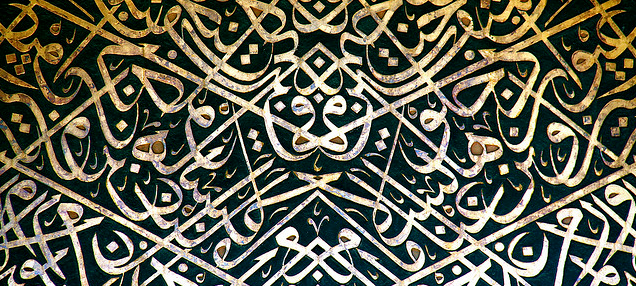
Abu Qasim Muhammad ibn Abdullah ibn Abdul Muttalib ibn Hashim was born in Mecca in the year 570 AD. He was raised by his uncle Abu Talib ibn Abdul Muttalib after being orphaned at an early age. At the time of his birth, the Arabian Peninsula had fallen into idolatry and disbelief, pagan traditions rampant and hedonism the norm.
Muhammad felt disgusted by all that. Revolted, he would retreat into the depths of Gar Hira for meditation. He could not believe that the true purpose of humanity was to bow down to stone and wooden statues of strange creatures in submission. He believed there was more. Turns out he was right.
At the age of forty, during one meditative sessions, Muhammad experienced something profound. A Light of Truth shone upon him in the form of the Archangel Gabriel who manifested before him with the command to read.

Initially, Muhammad was confounded by this. He did not know what he was being asked to read from. The angel embraced him, tighter and tighter, repeating the demand. Fear grasped Muhammad and he fled the scene, returning home to his wife, Hazrat Sayyidina Khadija bint Khuwaylid asking her to comfort him, lay her arms around him, soothe his nerves. As she did, Muhammad told her what happened and she assured him he was the Lord's Chosen.
The experience was profound and it was three years until the next revelation came, declaring Muhammad as a Prophet chosen to preach the doctrine of the One God to the pagan polytheists of Mecca. Daunted by the task, Muhammad was hesitant at first but steeled himself later on to begin his duty. He was persecuted, hurt, exiled and cast out. He lost his family and everyone he knew, those closest to him, dearest to him, were tortured along with him. Eventually, he and his followers took flight to Medina wherein the newest chapter of his ministry began.

In Medina, Muhammad turned his faith into a political system, forging the tribes there together into one state, with a law and an army. With his newfound power and influence, Muhammad launched a campaign to nationwide propagate the Faith of the One God of Abraham. Twenty-three years after the mission began, he succeeded.
The Arabian Peninsula came together as a singular entity of united tribes, a religious polity. The leaders who followed Muhammad after his death spread the faith even further. During the reign of Caliph Omar ibn al-Khattab, the faith found its way to Palestine, Egypt and Persia. The faith was known as Islam.

From an outsider perspective, Muhammad is considered to be the founder of Islam. However, from the viewpoint of a practitioner, God is the founder of Islam and Adam was the first among humans to be Muslim. He propagated the faith and passed down its knowledge through Seth to Enoch to Noah all the way through to Abraham, Isaac, Ishmael, Jacob, Joseph, Moses and David. The central creed of this faith: the doctrine of the One God, also known as Tawhid.

La ilaha il-Allah — this is the summary of the creed. There is no god but God. And Muhammad is His Messenger, merely a Prophet on the Path of Prophets. Patriarch Mar Timothy I of Baghdad states it succinctly as the following:
Muhammad is worthy of all praise by all reasonable people...
He walked in the Path of the Prophets and trod in the Trail of the Lovers of God.
All the Prophets taught the doctrine of the One God, and since Muhammad taught the doctrine of the Unity of God, he walked, therefore, in the Path of the Prophets.
Further, all the Prophets drove men away from misdeeds, and brought them nearer to good works, and since Muhammad drove his people away from impious acts and brought them nearer to righteousness, he walked, therefore, in the Path of the Prophets.
Again, all the Prophets separated men from idolatry and polytheism, and attached them to God and worshiping Him. Since Muhammad separated his people from idolatry and polytheism and attached them to the worship and knowledge of One God, beside whom there is no other God, he walked, therefore, in the Path of the Prophets.
Finally, Muhammad taught about God, His Word and His Spirit, and since all the Prophets had prophesied about God, His Word and His Spirit, verily indeed , Muhammad walked, therefore, in the Path of the Prophets...
Who, then, shall not praise, honor and exalt the great one who not only fought for God through words, but showed zeal for Him by the sword?

Patriarch Timothy I is a patriarch of the Church of the East often called, inaccurately since they accept and follow the Chalcedonian Creed, the Nestorian Church of the East or, simply, the Nestorian Church. It is to be distinguished from the Eastern Orthodox and Oriental Orthodox Churches. A prime difference between the Oriental Orthodox Church and the Nestorian Church of the East is that the former is Nasrani while the latter Hanif.
"Hanif" is a Syro-Aramaic word meaning "one rejecting and turning back" because the Nestorian Church observed the Sabbath and refrained from eating pork along with keeping other Laws of the Torah meticulously. The Schaff-Herzog Encyclopedia of Religious Knowledge states in the article concerning the Nestorians:
What is interesting to note here is that the word "Hanif" also appears in the Quran and it did not previously exist within the Arabic language before the Revelation of the Book unto Muhammad. The root of the word is Syriac, basically the same as above. It is used in the Quran to refer to those who maintained the pure monotheistic beliefs of Patriarch Abraham, having rejected idolatry and retained some or all of the tenets and laws of the religion of Abraham which was "Submission to God" in its purest form.
"Hanif" is a Syro-Aramaic word meaning "one rejecting and turning back" because the Nestorian Church observed the Sabbath and refrained from eating pork along with keeping other Laws of the Torah meticulously. The Schaff-Herzog Encyclopedia of Religious Knowledge states in the article concerning the Nestorians:
The Nestorians eat no pork and keep the Sabbath.Therefore, the greater majority of Christians considered that the Nestorians were turning back or inclining towards Judaism. Hence, the other Christians used to call the Nestorian Church "Hanif" because they were Hebraizers. Eventually the categorization stuck on.
They believe in neither auricular confession nor purgatory.
What is interesting to note here is that the word "Hanif" also appears in the Quran and it did not previously exist within the Arabic language before the Revelation of the Book unto Muhammad. The root of the word is Syriac, basically the same as above. It is used in the Quran to refer to those who maintained the pure monotheistic beliefs of Patriarch Abraham, having rejected idolatry and retained some or all of the tenets and laws of the religion of Abraham which was "Submission to God" in its purest form.

Say unto them,
"Nay, we follow only Hanif, the religion of Abraham, and he was not of the polytheists."
[Quran 2:135]
Abraham was neither a Jew nor a Christian, but he was a Hanif and he was not of the polytheists.
[Quran 3:67]
Therefore, set you your face towards Hanif, inclining towards Haqq and Fitrah. No change let there be in the Creation of God: that is the straight religion, but most of men know not.
[Quran 30:30]
In the final Quranic verse listed above, "Haqq" means "Truth" and "Fitrah" means "Natural Law" referring to the preset moral compass instilled within all humans and jinn, as believed by Muslims, from the moment of their creation. These, in total, encompass the notion that Abraham's doctrine of monotheism, Hanif, in faith and practice was the true lawful nature of human beings expressed physically and spiritually.
Meanwhile, the categorization of the Oriental Orthodox as Nasri came from their acceptance of the Coptic belief regarding the Month of el-Nasi. This is a thirteenth month lasting just a week or so in length. Nestorians do not accept this because of the prohibition of Nasi laid down in the Quran, the Revelation bestowed unto Muhammad, which the Church of the East term as Abu Qasim's Ahadith Qudsi, the Holy Narrations, making clear there are only twelve months, totally rejecting the Nasi,
Meanwhile, the categorization of the Oriental Orthodox as Nasri came from their acceptance of the Coptic belief regarding the Month of el-Nasi. This is a thirteenth month lasting just a week or so in length. Nestorians do not accept this because of the prohibition of Nasi laid down in the Quran, the Revelation bestowed unto Muhammad, which the Church of the East term as Abu Qasim's Ahadith Qudsi, the Holy Narrations, making clear there are only twelve months, totally rejecting the Nasi,
The number of months with God is only twelve by God's Ordinance since the day He divinely fashioned the Heavens and the Earth.
[Quran 9:36]

Muhammad also mentions the Nasi in the Farewell Sermon,
Certainly the Nasi' is an impious addition, which has led the infidels into error. One year they authorize the Nasi', another year they forbid it. They observe the divine precept with respect to the number of the sacred months, but in fact they profane that which God has declared to be inviolable, and sanctify that which God has declared to be profane.
Assuredly time, in its revolution, has returned to such as it was at the creation of the heavens and the earth. In the eyes of God the number of the months is twelve. Among these twelve months four are sacred, namely, Rajab, which stands alone, and three others which are consecutive.The Nestorians accepts Muhammad as a transcendentally appointed Messenger of God inspired by the Holy Spirit. They call him Abu Qasim, Abbot Cosimas, and his Quranic traditions collected and codified during the time and reign of Caliph Osman they honor and consecrate as the Ahadith Qudsi.

The Nestorian Church of the East consists of many orders within its ranks, one of them being the small, almost extinct, military order known as the Order of the Caraimean. The Caraimean believe Muhammad was an orphaned ecclesiastical poet, not illiterate as propounded by mainstream Sunni scholarship, but one prolific with words and letters, his narrations, beautiful poetry, some of which were written down upon tablets of rocks and rags of parchment, leaves and leather, surviving him while others were lost.
They believe that when Caliph Osman put together the official Quran, some narrations were left out because he only included the ones which were written and could be recited but some could be recited yet no written copy was found and some were written yet no reciter was found. These became the remnants of the Ahadith Qudsi

However, over time, more and more Ahadith Qudsi were being spread around, some authentic while others fabricate. Therefore, Imam Abu Hanifah laid down the criteria to identify which ones were the former and the latter using Kalam, that is, philosophical discourse, and Ijtihad, independent reasoning. He taught this to Anan ben David who was, as believed by the Caraimean, the only student dedicated enough to be imprisoned with Imam Abu Hanifah.
Regarding the Theology and Christology of the Caraimean Order, they believe in High God the Holy Father Almighty. He is ha-Eloh, the God, al-Ilah or Allah, the Divine One. His Essence, dhat, is the Divinity, Haloh or Allah, which He has given His creations the chance of becoming one with through theosis, known in Islamic Sufi terminology as fana'. Theosis, in contrast to fana', though, is believed to provide one the chance to become elohim or alihatun, that is, lesser gods in His family. The equivalent to these "gods" or elohim in Islamic theology would probably be Sifatullah because these are the Names and Attributes of the One God reflected unto the mirrored hearts of His creations.

The Caraimean Creed believes in the statement of "La ilaha il-Allah" where they interpret it as:
Meanwhile Christ is called Son of Mary — who is known by the Caraimean Order as the Christotokos, meaning Mother of Christ, and not the Theotokos, meaning Mother of God — not the Son of God. This is to emphasize his humanity. The role of the Messiah, according to the Caraimean, is to take the Logos from the Holy Spirit and be united with it forever. The Logos is from Allah but the Christ is not Allah. Together they are one in Jesus.
The God is One, and His Essence is One, but His Names are many.Therefore, the Holy Spirit, Ruh al-Quds, is considered to be a reflection of an eloh or sifat but not the God Himself, although emanating from the same Essence, Allah. The Holy Spirit carries the Logos which is also considered to be an eloh or sifat but not the God although emanating from the same Essence, Allah.
Meanwhile Christ is called Son of Mary — who is known by the Caraimean Order as the Christotokos, meaning Mother of Christ, and not the Theotokos, meaning Mother of God — not the Son of God. This is to emphasize his humanity. The role of the Messiah, according to the Caraimean, is to take the Logos from the Holy Spirit and be united with it forever. The Logos is from Allah but the Christ is not Allah. Together they are one in Jesus.

This is why it is said:
The Word is god from God, light from Light, truth from Truth, generated not created, but one divine essence with the Father. It was sent out by the Power of the Holy Spirit and through the flesh of the Virgin Mary to become one with man in Christ.
The Caraimean believe that Christ suffered death by crucifixion, he permitted it, under Pontius Pilate, who did not crucify him but only Allah allowed it to happen, and was buried, descended unto Sheol, the Realm of the Dead, at the End of Time to liberate the souls deserving Mercy, then rose again on the third day and ascended unto Heaven.
They believe we will see him again at the End of Days when he liberated the dead. Since time is relative, for him it has already happened but for us it is yet to happen. This is why the Caraimean say that Christ came and yet is coming. In Truth, it has all been accomplished already.

They believe that the Holy Spirit is Grace, termed Ahmed, poured out into the Saints, called Mahamadim. Each Saint is therefore named Muhammad. It is impossible to say Muhammad has gone, if he dies or is slain and the believer should not turn on their heels because, they believe, he will return in the next saint.
The Caraimean Order understands that when Abu Qasim was a child, the Archangel Gabriel came and opened his chest, took out his heart and put Ahmed inside of him. Hence, from that day onward he became Muhammad, and the same happens to every saint, at some point in their life.

This story and the foundation of this belief is not alien to Islam. The narration regarding the renewal of Muhammad's heart is found in a hadith concerning Muhammad's childhood related by Anas ibn Malik in the Sahih of Imam Muslim which states the following:
They believe that the Holy Spirit is Grace, termed Ahmed, poured out into the Saints, called Mahamadim. Each Saint is therefore named Muhammad. It is impossible to say Muhammad has gone, if he dies or is slain and the believer should not turn on their heels because, they believe, he will return in the next saint.
The Caraimean Order understands that when Abu Qasim was a child, the Archangel Gabriel came and opened his chest, took out his heart and put Ahmed inside of him. Hence, from that day onward he became Muhammad, and the same happens to every saint, at some point in their life.
This story and the foundation of this belief is not alien to Islam. The narration regarding the renewal of Muhammad's heart is found in a hadith concerning Muhammad's childhood related by Anas ibn Malik in the Sahih of Imam Muslim which states the following:
"Gabriel came to the Apostle of Allah while he was playing with his mates. He took hold of him and made him to lay on his back, ripping open his chest and taking out the heart from it.
He then proceeded to open the heart and extracted something that clung in it stating that was the part leading Man to sin. Then, his heart was washed in a gold basin with the Water of Zamzam, closed, and restored to its place. The boys came running to his foster mother and said,
Verily, Muhammad has been murdered!They all rushed towards him and found him changed in complexion.
Anas said,
I myself saw the mark of stitching on his chest."
Muslims believe Gabriel is the Holy Spirit, Ruh al-Quds, who is tasked as the Archangel of Revelation to carry the Word of God to the Saints and Prophets. This is referenced multiple times in the Quran,
"And verily We gave unto Moses the Scripture and We caused a train of messengers to follow after him, and We gave unto Jesus, son of Mary, evident signs, and we supported him with the Holy Spirit."
[Quran 2:87]
"That Day God shall say: 'O Jesus, the son of Mary, recount My Favor unto thee and to thy mother. Behold! I strengthened thee with the Holy Spirit!"
[Quran 5:110]
"Say: the Holy Spirit has brought the Revelation from thy Lord in Truth, in order to strengthen those who believe, and as Guidance and Glad Tidings to Muslims."
[Quran 16:102]
Therefore, Gabriel, the Holy Spirit, cleansing the heart of Muhammad and implanting it unto him anew brimming with the Inspiration from the Grace of God is not entirely a bizarre idea from an Islamic viewpoint, though the resultant events and the interpretation of the event itself is different.

In the end, the gist of the matter is this, that our Caraimean brothers among the echelons of the Nestorian Church, have the utmost respect for our Liege Lord and Sultan al-Qulub Muhammad salallahu alayhisalam.

It is a shame today that so many of our brethren among them are being slaughtered inhumanely by those who claim to be from us such as the likes of ISIS and al-Qaeda. The violence perpetrated unto them by these terrorist so-called Muslims who are, in reality, munafiqun, are driving the Nestorians to believe that perhaps Patriarch Mar Timothy I was wrong about Muhammad and his people, leading them to leave the Church of the East for other denominations.

What is even more saddening is that the Church is already dwindling in regards to numbers. We cannot be the ones under whose name they are driven to extinction, specially when they behold our Prophet in such eminent light. We have to extend our hands to them, embrace them as one with us, hand in hand, together as humanity against the subhuman ilk of terrorism and extremist fundamentalism that is corrupting our world today.
I end this article with the Achtiname of our beloved Prophet Muhammad to the Christian Monks of Mount Sinai penned by his esteemed cousin and son-in-law Mawla Imam al-Murtaza Ali ibn Abu Talib:

I end this article with the Achtiname of our beloved Prophet Muhammad to the Christian Monks of Mount Sinai penned by his esteemed cousin and son-in-law Mawla Imam al-Murtaza Ali ibn Abu Talib:
This is a letter issued by Muhammed, son of Abdullah, the Messenger, the Prophet, the Faithful, who is sent to all the people as a trust on behalf of God to all His creatures and creation, that they may have no plea against God hereafter. Verily God is Mighty and Wise.
This letter is directed to the ones embracing submission to God in peace, as a covenant unto the followers of the Holy Nazarene in the East and West, the far and the near, the Arabs and foreigners, the known and the unknown.
This letter contains the oath given unto them, and he who disobeys that which is therein will be considered a renegade and transgressor to that whereunto he is commanded. He will be regarded as one who has corrupted the Oath of God, disbelieved His Testament, rejected His Authority, despised His Religion, and made himself deserving of His Curse, whether he is a Sultan or any other Muslim.
Whenever monks, devotees and pilgrims gather together, whether in a mountain or valley, or den, or frequented place, or plain, or church, or in houses of worship, verily we are behind them and shall protect them, and their properties and their morals, by myself, by my friends and my allies, for they are of my subjects and under my protection.
I shall exempt them from that which may disturb them; of the burdens which are paid by others as an oath of allegiance. They must not give anything of their income but only that which pleases them — they must not be offended, or disturbed, or coerced or compelled.
Their judges should not be changed or prevented from accomplishing their offices, nor the monks disturbed in exercising their religion, or the people of seclusion be stopped from dwelling in their cells.
No one is allowed to plunder the pilgrims, or destroy or spoil any of their churches, or houses of worship, or take any of the things contained within these houses and bring it to the houses of Islam. And he who takes away anything therefrom, will be one who has corrupted the Oath of God, and, indeed, disobeyed His Messenger.
Poll-taxes should not be put upon their judges, monks, and those whose occupation is the worship of God; nor is any other thing to be taken from them, whether it be a fine, a tax or any unjust right.
Verily I shall keep their compact, wherever they may be, in the sea or on the land, in the East or West, in the North or South, for they are under my protection and the testament of my safety, against all things which they abhor.
No taxes or tithes should be received from those who devote themselves to the worship of God in the mountains, or from those who cultivate the Holy Lands. No one has the right to interfere with their affairs, or bring any action against them.
Verily this is for aught else and not for them; rather, in the seasons of crops, they should be given a Kadah for each Ardab of wheat as provisions for them, and no one has the right to say to them this is too much, or ask them to pay any tax.
As to those who possess properties, the wealthy and merchants, the poll-tax to be taken from them must not exceed twelve drachmas a head per year.
They shall not be imposed upon by anyone to undertake a journey, or to be forced to go to wars or to carry arms; for the Muslims have to fight for them. Do no dispute or argue with them, but deal according to the verse recorded in the Quran,
Do not dispute or argue with the People of the Book but in that which is best [29:46]
Thus they will live favored and protected from everything which may offend them by the Muslims, wherever they may be and in any place they may dwell.
Should any Christian woman be married to a Muslim, such marriage must not take place except after her consent, and she must not be prevented from going to her church for prayer.
Their churches must be honored duly as their right and they must not be obstructed or withheld from building churches or repairing their convents.
They must not be forced to carry arms or stones; but the Muslims must protect them and defend them against others.
It is positively incumbent upon every one of the Islam nation not to contradict or disobey this oath until the Day of Resurrection and the End of Time.

— Fahim Ferdous Kibria