Tuesday, November 11, 2014

The Inferno


A common problem among Muslims and Christians nowadays is the prevalent notion of hellfire and its denizens. Who are the infidels? Who are the ones condemned to fill the infernal belly of the Hearth? It seems everyone is quick to paint the other as those destined for the netherworld. But is the reality actually so black and white?

God has given us enough intellect to understand Their Will, haven't They? Therefore, those deserving of Hell are fairly obvious such as the likes of Hitler and Ted Bundy – blatantly evil people. We believe our God is a Merciful God. If you can look at someone and say, "They seem like a nice person. I can't imagine God putting them in Hell,"
then what makes you think a God more merciful than you will do it?

'Umar ibn al-Khattab reported that some prisoners were brought to the Prophet Muhammad among whom there was also a woman who was searching for a child among the prisoners and, upon finding it, took hold of it, pressed it against her bosom and provided it suckle. Thereupon the Prophet asked:
Do you think this woman could ever throw her child into the Fire?
We answered:
By God, so far as it lies in her power, she would never throw the child into the Fire. 
Then, the Prophet said:
God is more kind to Their servants than this woman is to her child.
[Sahih Muslim, Book 37, Hadith 6635]

God realizes we are imperfect. They don't punish us just because we masturbated or something silly like that.
In Islam, there is a story about a murderer who, after committing ninety-nine murders, realizes he was going to Hell for his crimes and wanted to be forgiven, so he went to a priest of a mosque who told him that there was no hope of salvation for the man, thus he murdered the priest too as his hundredth victim.

Afterwards, overcome with remorse, he set for the Holy Land to seek forgiveness but died a little along the way. When the angels came to reap his soul, they debated whether they should deliver his soul unto Heaven or Hell. God, then, intervened and ordered them to measure the distance between his corpse and his house and then between his corpse and the Holy Land. If he was found closer to the Holy Land, the angels were ordered to
deliver him to Heaven and if he was found closer to his home, then the angels were ordered to deliver him to Hell. Although the latter happened to be the case in truth, God shifted the fabric of reality as such following Their Decree that his body appeared closer to the Holy Land and he was saved. This was because the man was repentant and prepared to journey for the sake of forgiveness, so God forgave him for his sincere desire to attain Their Mercy.

In other words, God is not a machine with preset protocols where if you do not fit a certain criteria, you are not accepted by Them. God created us and knows we are tempted to sin. They don't punish us just because we may falter on our path – such a God would not be a Merciful God. Hell is reserved for those who are arrogant in sin, thinking themselves beyond the need of God's Mercy and Grace.

To explain it in simple terms, God does not turn anyone away from Salvation. Those in Hell have chosen the place on their own for themselves by saying they don't need Mercy and Salvation – they are above the requirement to plead for forgiveness. They think they are perfect, superior to all, even God, and they would rather be in Hell
than be remorseful. By realizing that you have sinned, you have already exempted yourself from that list.
So don't worry about it. Pray!


— Fahim Ferdous Kibria

Knight of Justice


Forced to witness the murder of his parents at the tender age of seven, Bruce Wayne vowed to protect Gotham City so that never would another have to suffer like him. A hardened vigilante trained in every single martial art known to man; armed with a custom-made Kevlar armor, gadgets, an utility belt and a strategic mind prepped to calculate contingency plans for any possible situation, Batman has waged a crusade to safeguard innocents and deliver criminals to justice. However, there is one thing he won't do in his mission to defend Gotham: Kill.

The Batman franchise has extended itself reaching multiple media outlets producing TV shows, an animated series, video games, comic books and movies each presenting the Caped Crusader in an exclusive light of its own but always retaining a central foundation of moral values revolving around the theme of justice. Batman is justice.

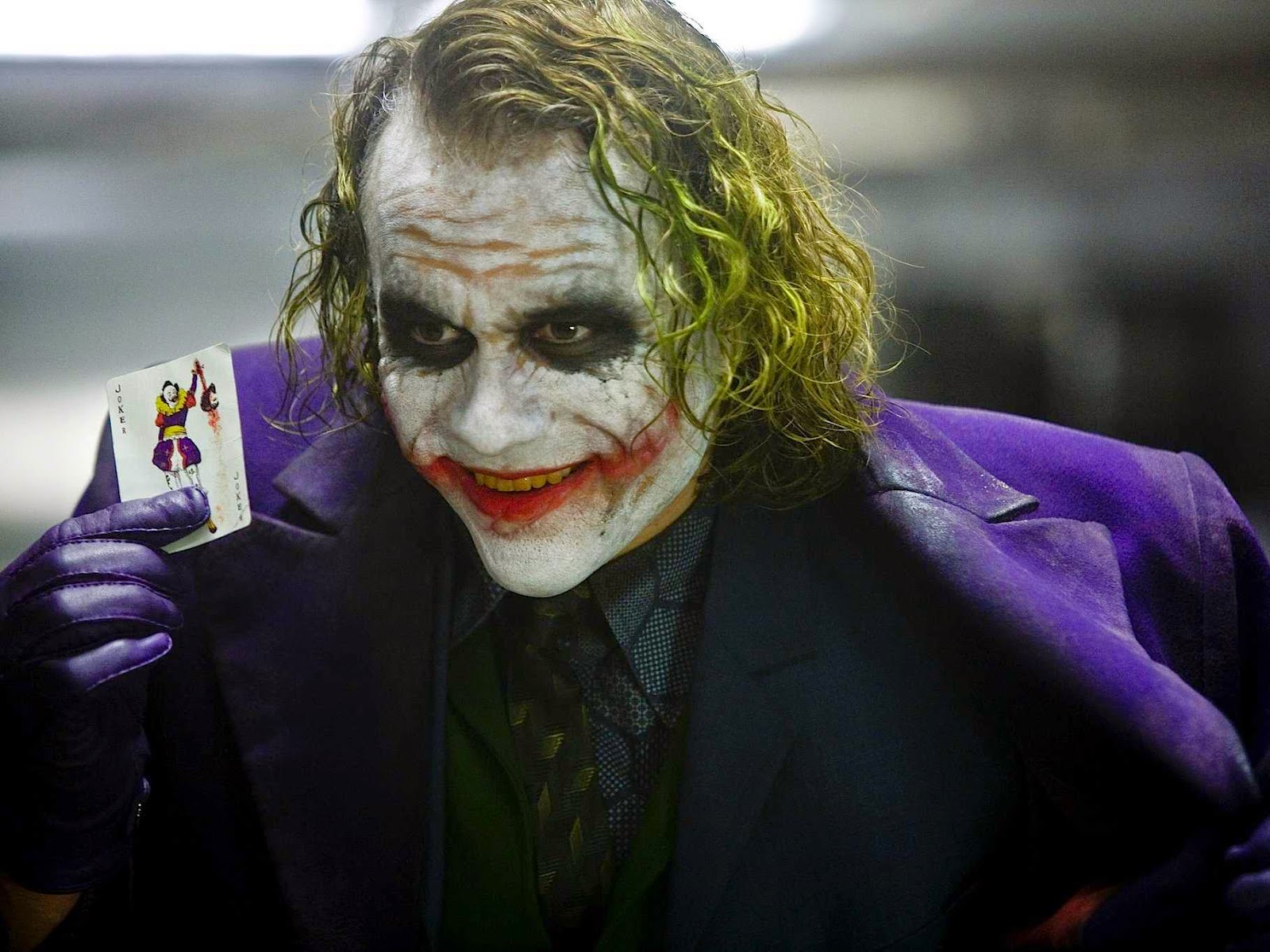
Regardless of the opponent he is facing, whether it be the maniacal Joker or the demented Scarecrow, Batman has forever remained true to his word to never kill, believing every human being, no matter how twisted, how far beyond salvage, deserves a chance to plead at a fair trial, a chance at receiving salvation. Case in point:


Even after all that Joker has done to cause death and destruction, Batman still believed he deserved a chance and he wanted to help, to dig into the Joker's psyche, claw out whatever sanity that maybe left in him to try to save him. Nonetheless, Joker refused. We do not know why, but he refused. Yet, Batman wanted to help.

Embittered by the chaos and violence constantly barraging his life, Bruce Wayne has seen it all and it is a mystery how he has managed to hang on to any sense of normalcy without being driven a deranged, raving lunatic. However, regardless of the modality, the fact of the matter is that he has maintained to preserve his mind and use it for the good of others. And that is the core goal of Batman: fight for the good others, whether they be evil or righteous.

This philosophy is nowhere more pronounced than throughout the plot of the Batman video game, Arkham City.


The story of the video game revolves around the eponymous Arkham City, close to a year after the events of the previous game, Arkham Asylum. Following the events of the preceding title, Quincy Sharpe, formerly the warden of Arkham Asylum, hands over the ownership of his institution to Hugo Strange who then proceeds to expand it over a portion of Old Gotham barricading it off from the main city. The ramifications are absolutely disastrous.


With no supervision, the criminals of Gotham are set loose to roam the decrepit streets of Old Gotham raging war against one another as Arkham City boils into a free-for-all turf-brawl between the fat slugs of Gotham's underbelly: mobster mastermind, Oswald "The Penguin" Cobblepot, fallen tragic hero, Harvey "Two-Face" Dent and unhinged anarchist, the Joker. It is pure and raw pandemonium as Hell descends on Earth leashed only by a flimsy wall, pegged to crumble down any minute, from the helpless, oblivious citizens of Gotham.


The game opens with a cut-scene of Bruce Wayne standing outside the gates of Arkham City protesting against the institution and rallying for the closure of it. Minutes later, he is attacked by TYGER guards and imprisoned within the same complex he was protesting against merely moments ago.


Following the capture, Bruce Wayne is greeted by Hugo Strange who reveals that he knows the former's secret identity along with the ominous declaration that something called Protocol 10 is going to make him famous. After this, the psychiatrist leaves and Bruce hatches his plot to escape, stealing a chip from one of the TYGER guard's communication radios in the process. He is swiftly intercepted and forced to enter through the gates of Arkham City into the main body of the prison where he is rudely welcomed by Cobblepot.


After a brief altercation, Bruce takes out all of Penguin's thugs and calls in Alfred to send in his Batsuit on top of the Ace Chemicals building within Arkham. Following the suit-up, Batman heads to the abandoned courthouse where Two-Face has Catwoman hostage.


Rescuing the latter from the disgraced District Attorney, Batman questions her about Protocol 10. She doesn't know. The rendezvous is interrupted by a bullet aimed at the thief, missing the mark.


Batman tracks down the location from where the bullet was fired using its trajectory and investigates the gun which was being remotely controlled by none other than... the Joker.


The Caped Crusader manages to track down the Clown Prince of Crime down to his hideout at the Sionis Steel Mill but he is soon taken captive, bound and injected with Joker's blood which, he soon learns, is toxic due to overdosing on the TITAN drug a year ago at the Asylum. Joker asks Batman to help him find a cure or else they both will die, along with the rest of Gotham who have also been poisoned thanks to Harley Quinn shipping samples of Joker's blood to all of the city's hospitals.


Joker informs Batman that he tasked Mr. Freeze to make the antidote for the TITAN drug but he has gone missing since. He pleads Batman to find him and acquire the cure. Batman learns Mr. Freeze, unfortunately, is under the custody of the Penguin. The Caped Crusader then goes on to seek out the mob boss who has taken over the old Gotham Museum as his base of operations.


Batman rescues Freeze from the hands of the Penguin but is soon told by the cryogenic doctor that the cure for the TITAN drug is too unstable and will break down inside the human body without the help of an enzyme which the cowled detective identifies as one found in the blood of Ra's al-Ghul, head of the League of Assassins.


Batman tracks down the bio-terrorist hiding deep within the bowels of Arkham City underneath the ruins of the ancient Wonder Tower. There, Ra's offers to give Batman his blood at one cost: Batman must take his life. Naturally, the latter refuses and the two engage in battle which ends in the Caped Crusader's favor who succeeds in pacifying the Grandmaster Assassin without killing him. The detective returns to Freeze with the blood sample.

Mr. Freeze manages to concoct the cure to the TITAN drug successfully but refuses to hand it over to Batman revealing that Nora, his wife, has been kidnapped by the Joker's men. He asks Batman to return his wife to him if he wants the antidote. Batman does not have time for negotiations. The two initiate battle.


Batman proceeds to take down Mr. Freeze but by the time he is done with him, Harley Quinn has managed to steal the antidote for the TITAN drug and is on her way to the Sionis Steel Mill. The Caped Crusader takes pursuit.

Upon reaching the Steel Mill, Batman comes face-to-face with a rejuvenated Joker all ready for a final showdown. The latter calls forth a horde of thugs and a fight ensues.


Batman deftly sweeps through Joker's hooligans eventually leaving only himself and the Clown Prince of Crime behind. The two clash forces and the Caped Crusader comes out on top. However, just as he is about to land the finishing blow, Protocol 10 begins.

Protocol 10 turns out to be a plan to destroy Arkham City with all the captives locked up within it. Hugo Strange plotted the operation to eradicate every single criminal of Gotham along with any enemies he has locked up within the compound as political prisoners.

Arkham City is bombarded with missiles from choppers and Batman is pinned down under debris as Joker taunts to kill the detective once and for all until he is stopped by Talia al Ghul, daughter of Ra's al Ghul. She offers the Joker a trip to the Lazarus Pit in exchange for him to let Batman go. He agrees but before the two leaves, Talia signals to a GPS tracker implanted on her body to let Batman know how to find her. Batman blacks out.


Batman wakes up to Catwoman removing the debris off him.


She lends him a hand and the Caped Crusader manages to get up on his feet to witness the unfolding of Protocol 10.


Arkham City is burning. TYGER choppers have blanketed the decaying urban landscape with bombs and rockets ripping and blasting the city bit by bit. Batman watches on as he has a decision to make: save Talia from the hands of the Joker or save Arkham. Obviously, at this point, anyone would go for the former and leave Arkham City to smolder into ruins. Why care for a necropolis of criminals? Well, it seems Batman didn't quite get the memo.

After a brief debate with Alfred as to what should be the best course of action, Batman decides upon the latter, heading to Wonder Tower to stop Hugo Strange and his Protocol 10. But why save the lives of those who never cared for the sanctity of another? Because he is Batman.

Throughout the entire length of the game, we now realize, that Batman has been endeavoring not only to find the cure to Joker's disease and save him but also Arkham City: a hellhole of scum and filth. And he succeeds too, eventually managing to rescue Talia as well only to watch her die as Joker shoots her in the spine and reveals his plot: Clayface has been masquerading as the Joker all night while the real Joker was hiding at the Monarch Theatre.


After a battle against the monster of mush, the Batman and the Joker find themselves underneath the subterranean levels of the theater where the Joker fails to resist the urge to back-stab Batman one more time consequently causing Batman to drop the vial of cure containing Joker's half of the potion shattering upon contact with the concrete.

Joker scampers towards the crumbled shards of glass to scoop up any measly drops of the medicine he could find but to no avail. The cure was long gone. Joker was going to die. And in his final moments, the Clown Prince of Crime and the Dark Knight share one last dialogue,
The Joker:
Quick, the cure! What are you waiting for?
Come on! I killed your girlfriend, poisoned Gotham, and hell, it's not even breakfast.
But so what? We all know you'll save me.
Batman:
Every decision you've ever made ends in death and misery.
People die. I stop you. You'll just break out and do it again.
The Joker:
Think of it as a running gag... Nooooo!
Are you happy now?
Batman:
You want to know something funny?
Even after everything you've done... I would have saved you.
The Joker:
That actually is... pretty funny...

Batman has always been a symbol of a justice but oftentimes he has been more than that. He has been many a times been an icon of hope, even for the belly-crawlers and vermin of society. He has been an icon of mercy, always willing to forgive and forget, to give them another chance.


In Christopher Nolan's epic Dark Knight Trilogy we see the eponymous Dark Knight save the Joker after a trouncing in the ending segment of the second movie even after the latter had been directly responsible for the death of the love of his life, consequences of which had the Watchful Guardian of Gotham retire into oblivion for the next eight years, drowning in everlasting sorrow and depression. Yet, regardless of that, when the time came to avenge her demise, Batman opted rather to save the Joker's life and, in the process, save his own soul from descending into the darkness of the Joker's world. It is perhaps as a plaudits to this that the Joker offers his final few lines of the movie:
Oh, you. You just couldn't let me go, could you? This is what happens when an unstoppable force meets an immovable object. You truly are incorruptible, aren't you?
You won't kill me out of some misplaced sense of self-righteousness.
And I won't kill you because you're just too much fun.
I think you and I are destined to do this forever.

And such is the morality of the Batman. He will never kill. He will never seek revenge. Only justice. His crusade against the demons of Gotham is a crusade to save the city and its people, not punish them. Every criminal of the city, every thug, every scum, to him, is a victim of the darkness that seeps through the city, not an active agent of it. And he is their savior. This is the promise he has made, as he walks the line between good and evil, that justice shall be served and not revenge. This thin line that he tiptoes delicately day after day and night after night has been made manifest by the voice of reason and sanity offered by Rachel Dawes early within the Nolan-verse movie that kicked off the franchise, "Batman Begins" when the deputy district attorney tells her seething friend Bruce Wayne who had appeared at the hearing of Joe Chill, the murderer of his parents, with a gun to exact justice that such is not justice. Such, as what Bruce was about to do, was revenge. After the death of Chill as decreed by Falcone, the two speak,
Rachel Dawes:
The DA couldn't understand why Judge Faden insisted on making the hearing public. Falcone paid him off to get Chill out in the open.
Bruce Wayne:
Maybe I should be thanking them.
Rachel Dawes:
You don't mean that.
Bruce Wayne:
What if I do Rachel? My parents deserved justice.
Rachel Dawes:
You're not talking about justice. You're talking about revenge.
Bruce Wayne:
Sometimes they're the same.
Rachel Dawes:
No, they're never the same, Bruce. Justice is about harmony. Revenge is about you making yourself feel better. Which is why we have an impartial system.
Bruce Wayne:
Your system is broken.
Rachel Dawes: 
You care about justice? Look beyond your own pain, Bruce. This city is rotting. 
People talk about the depression as if its history, and it's not.
Things are worse than ever down here. Falcone floods our streets with crime and drugs, preying on the desperate, creating new Joe Chills every day. Falcone may not have killed your parents Bruce, but he's destroying everything they stood for.
You wanna thank him for that, here you go. We all know where to find him, but as long as he keeps the bad people rich and the good people scared no one will touch him. 
Good people like your parents who will stand against injustice, they're gone. 
What chance does Gotham have when the good people do nothing?
Bruce Wayne:
I'm not one of your good people, Rachel.
Rachel Dawes:
What do you mean?
Bruce Wayne:
All these years I wanted to kill him. Now I can't.
Rachel Dawes:
Your father would be ashamed of you.

Batman ensures that his crusade is always about setting things right for the people of Gotham and not for himself. Every strike, every blow is a measure of justice, not revenge. A tale of Imam Ali from Fadhail-e-A'mal comes to mind:

In the battle of Khandaq, the Muslims dug a ditch around themselves for their defense, so that the enemy could not get across. A man from the enemy side called Amr ibn Abdul-Wud, who was known for his strength, courage and proficiency in martial arts managed to get across the ditch. All the Muslims were terrified to fight him except the valiant Imam Ali came forward to fight this man.

There was a fierce fight until at last Imam Ali threw Amr down onto the ground and mounted his chest ready to kill him. Just as Imam Ali was about to kill this enemy of Islam, he spat on the face of the Imam.

Everybody was certain that because of this insult, Amr would meet his death even faster still, but to their amazement, Imam Ali moved from Amr’s chest and walked away. Amr attacked the Imam again and after a short while, Imam Ali, once more, overpowered Amr and killed him.

After the battle was over people asked Imam Ali the reason why he had spared Amr’s life when he had first overpowered him to which the Imam replied that if he had killed him then it would have not been purely and solely for the Sake of God but also for the satisfaction of his anger and so he let him free. Then the Imam controlled his anger and killed Amr purely for the Sake of God. Such was the virtue of the exalted Imam-e-Murtaza Ali ibn Abi Talib.


Similarly, Batman, too, seeks to deliver every hit for the sake of justice and solely justice. Never revenge. And if the time ever comes that this were to be untrue, Batman would cease to be Batman and the night that overcasts Gotham would never fade away. What is it then that keeps the Watchful Guardian from transforming into a Vengeful Warlord?

I don't know. Perhaps it is what he has seen within the shadows of malevolence. Perhaps, while tiptoeing the line between good and evil, he has realized that the two sides are not very different. Perhaps he knows that if he were to mete out harshness towards the critters of the dark side, he would have to exact the same judgment upon himself because, at the end of the day, pun intended, the dawn and the dusk may perhaps be one and the same.

Batman knows that he is not very different from the ones whom he fights. The criminals, the gangbangers, all victims of a corrupt system. Perhaps something happened in their lives that caused them to snap just like him. He knows he was not far from being the same when he sat by the corpses of his parents at Crime Alley. Perhaps he did snap? Perhaps his insanity and obsession just happened to be for the good of the denizens of Gotham by chance? I mean, what else would you call a man in a suit resembling a giant bat parkouring from rooftop to rooftop beating up thugs with his bare hands other than a raving lunatic? It is perhaps by a merciful twist of fate that this insane knight of the dark stands and fights amid the angels of light.


— Fahim Ferdous Kibria

Monday, November 10, 2014

Question is... Doctor Who?


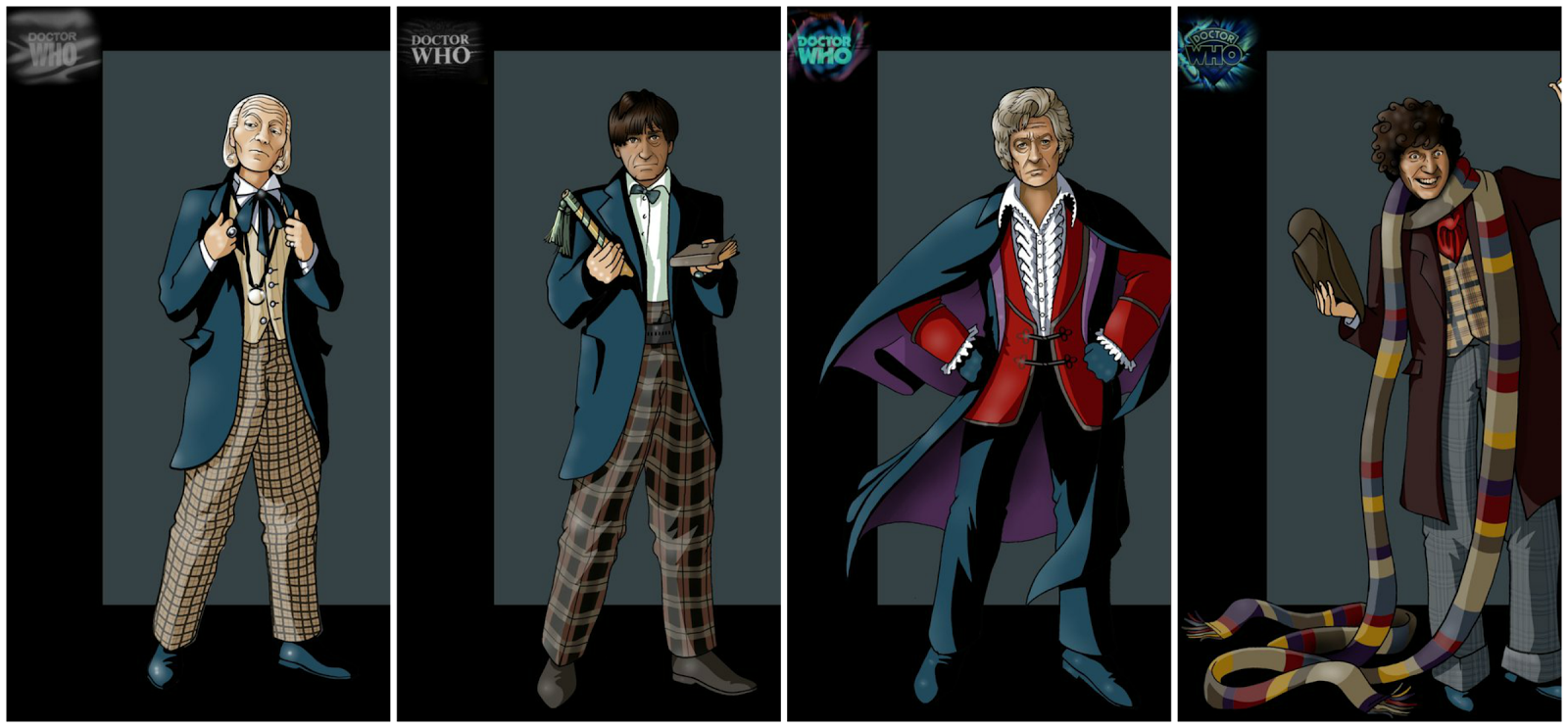
Doctor Who is a British media franchise revolving around the tales and adventures of a humanoid alien time traveler from Gallifrey in the Constellation of Kasterborous, sailing across the Seams of Chronos and Threads of Aether, armed with a sonic screwdriver, aboard the TARDIS, almost always alongside a companion for good measure.

Oftentimes, actually quite more so than often, perhaps quite very consciously, the story arcs and concepts of the show delves with the philosophy of metaphysics and ethics. For example, the idea of Regeneration attempts to answer a fundamental question in metaphysics: how do we know we are who we are throughout our lives?

The question arises because over the years we shed dead cells off our bodies to be replaced by new ones, transforming completely over decades. Thus, after a decade or so, we are a totally new composition of cells.
Is this 'me' really biologically me or someone else with my consciousness?


See how when the Doctor regenerates he has a new body and personality? And the new body has a new level of health, strength, agility and durability; new modes of thinking due to a biologically new brain pulling the strings of hormones and neurotransmitters responsible for thought and behavior. So how do we decide that it is actually him?

Similarly, as we grow older our body sheds cells when they die and our brain patterns will constantly change,
therefore altering our personality. So, in a way, everyday, in fact every hour, every minute and every second, we are regenerating into a new person entirely.

Therefore, ten years down the line, all our dead cells will be replaced by completely new ones and we will have
a different personality overall with new likes and dislikes in response to our experiences and changes in
the chemical composition of our brains. Hence the question: new cells, new personality, new everything, so how am I still me? That is when we think about regeneration and the Doctor – how do we decide he is truly the Doctor?


Is it because of the same memories, the events that he has gone through? Are those the deciding factors to ascertain the identity of a person? Then the question arises: what if we displace all the memories of person A into the mind of person B? Is person A, now, person B? No? Why not? Let us take this a step further.

What if we displace all the memories of person A into the mind of person B and then replace every cell in
person B's body with the cells of person A – same biological and cognitive makeup. At this point, if we kill person A, would we be able to say person A is still alive since person B is now virtually person A? Or are they – are we – defined by more than just that? Ponder about the query for even a moment if you will. Thank you.

Friday, November 7, 2014

God and the Problem of Evil

"I willingly believe that the damned are, in one sense, successful, rebels to the end;
that the Doors of Hell are locked on the inside."
~ C.S. Lewis
The problem of evil has long been used against religion and the existence of God, and by all means, it is
a valid argument, but an argument does not simply triumph for its inherent validity. As powerful as the argument is,
it is absolutist in nature to believe that the mere existence of God stomps out all evil. Such an idea grossly corrupts the definition of God as presented by the majority faiths extant today such as Judaism, Islam and Christianity.

Thus, before we begin, let us take the definition of God as presented by the aforementioned religions: God is
an Eternal Force, a Merciful Creator Who crafted us to fulfill Their Design on Earth as it is done in Heaven.
Nowhere do the religions claim that God is a patrolman knocking door-to-door and smiting those who commit evil. Yes, the religions do speak of God as a Supreme Judge Who will punish the wicked and reward the good, but unfortunately the court date isn't here yet.

The religious scriptures do not proclaim that the existence of God means the absence of evil. Nowhere in
the Torah, the Bible or the Quran does God state:
"I exist and My mere existence is the end of all evil."
On the contrary, God acknowledges evil quite a substantial number of times in the Scriptures and They do not fail to explain its existence. God has stated numerous times that evil is a by-product of our failure to abide by Their Laws which makes sense, at least to me personally.

That is why, to say, that the existence of evil disproves the existence of God is somewhat inadequate. It would be like saying that the existence of bicycles disproves the existence of boats. No-one ever claimed that for bicycles to exist as a fact of reality, boats cannot. Similarly, almost no theistic faith claims that for God to exist, evil cannot.
Such is not the definition of God.

Think of it this way, evil is not a concept but a consequence of not doing the right thing. God has commanded us to
do the right thing vehemently throughout the Scriptures. Hence, evil is not an idea of Their Creation but the fruits of our misdeeds. Allow me the liberty to use an example:

Let us say that a father leaves behind enough money as inheritance for three sons. He also writes down guidelines for the sons to follow in order to use the money without creating mischief. However, the first son hoards all of it
for himself and wastes it on vain desires. This creates the problem of the two sons living in poverty and pain. Perhaps one of them turns into a criminal to survive. Did the father create the problem? No. He had left behind enough property for all three. The problem was created when the first son committed the misdeed of
squandering all the wealth on his own, not abiding by the commands of the father.

God told us, very plainly, not to murder, not to steal, not to bear false witness, yet we do so, often with glee;
these misdeeds 'create' evil. In fact, it can be argued that evil is not created but begotten as children of mischief, acts that our Creator strictly commanded us to avoid.

Therefore, it is ludicrous to blame God for all the evils of the world since They are the One Who has set forward Commandments to follow in order to stop the procreation of evil, Commandments that we deny to follow and
when our denial births evil we blame it on They Who provided substantial advice to avert the problem. It is as if
when a mother tells her child not to touch the fire lest the child get afflicted by a burn but the child touches the fire and is scalded, the mother is blamed.

The similitude of the sinning soul is akin to the story of Iblis and Adam which is precisely why I believe God relates it in the Holy Quran. The lessons to take from the story are manifold.

We have condemned ourselves by distancing us from our Creator, Their Laws and Love, and blamed Them for it.
I believe the problem of evil is a problem we have created to turn ourselves away from God and deprive ourselves of Their Grace. We have turned ourselves away from the Gift of Paradise and locked ourselves in Hell.


— Fahim Ferdous Kibria

Thursday, November 6, 2014

Virtue


Next we must examine what is virtue. Since there are three conditions arising in the soul—feelings, capacities, and states—virtue must be one of these.

By feelings I mean appetite, anger, fear, confidence, envy, joy, love, hate, longing, jealousy, pity, and in general whatever implies pleasure or pain. By capacities I mean what we have when we are said to be capable of these feelings—capable of being angry, for iristance, or of being afraid or of feeling pity. By states I mean what we have when we are well or badly off in relation to feelings. If, for instance, our feeling is too interise or slack, we are badly off in relation to anger, but if it is intermediate, we are well off; the same is true in the other cases.

First, then, neither virtues nor vices are feelings. For we are called excellent or base insofar as we have virtues or vices, not insofar as we have feelings. Further, we are neither praised nor blamed insofar as we have feelings; for we do not praise the angry or the frightened person, and do not blame the person who is simply angry, but only the person who is angry in a particular way. We are praised or blamed, however, insofar as we have virtues or vices.

Further, we are angry and afraid without decision; but the virtues are decisions of some kind, or requife decision. Besides, insofar as we have feelings, we are said to be moved; but insofar as we have virtues or vices, we are said to be in some condition rather than moved.

For these reasons the virtues are not capacities either; for we are neither called good nor called bad, nor are we praised or blamed, insofar as we are simply capable of feelings. Further, while we have capacities by nature, we do not become good or bad by nature; we have discussed this before.

If, then, the virtues are neither feelings nor capacities, the remaining possibility is that they are states. And so we have said what the genus of virtue is. But we must say not only, as we already have, that it is a state, but also if what sort of state it is.

It should be said, then, that every virtue causes its possessors to be in a good state and to perform their functions well. The virtue of eyes, for instance, makes the eyes and their functioning excellent, because it makes us see well; and similarly, the virtue of a horse makes the horse excellent, and thereby good at galloping, at carrying its rider, and at standing steady in the face of the enemy.

If this is true in every case, the virtue of a human being likewise be the state that makes a human being good and makes him perform his function well. We have already said how this will be true, and it will also be evident from our next remarks, if we consider the sort of nature that virtue has. In everything continuous and divisible we can take more, less, and equal, and each of them either in the object itself or relative to us; and the equal is some intermediate between excess and deficiency.

By the intermediate in the object I mean what is equidistant from each extremity; this is one and the same for all. But relative to us the intermediate is what is neither superfluous nor deficient; this is not one, and is not the same for all.

If, for instance, ten are many and two are few, we take six as intermediate in the object, since it exceeds two and is exceeded by ten by an equal amount, four. This is what is intermediate by numerical proportion. But that is not how we must take the intermediate that is relative to us. For if ten pounds of food, for instance, are a lot for someone to eat, and two pounds a little, it does not follow that the trainer will prescribe six, since this might also be either a little or a lot for the person who is to take it—for Milo, the athlete, a little, but for the beginner: in gymnastics a lot; and the same is true for running and wrestling.

In this way every scientific expert avoids excess and deficiency and seeks and chooses what is intermediate—but intermediate relative to us, not in the object. This, then, is how each science produces its product well, by focusing on what is intermediate and making the product conform to that.

This, indeed, is why people regularly comment on well-made products that nothing could be added or subtracted; they assume that excess or deficiency ruins a good result, whereas the mean preserves it. Good craftsmen also, we say, focus on what is intermediate when they produce their product. Since virtue, like nature, is better and more exact than any craft, it will also aim at what is intermediate.

By virtue I mean virtue of character; for this is about feelings and actions, and these admit of excess, deficiency, and an intermediate condition. We can be afraid, for instance, or be confident, or have appetites, or get angry, or feel pity, and in general have pleasure or pain, both too much and too little, and in both ways not well. But having these feelings at the right times, about the right things, toward the right people, for the right end, and in the right way, is the intermediate and best condition, and this is proper to virtue.

Similarly, actions also admit of excess, deficiency, and an intermediate condition. Now virtue is about feelings and actions, in which excess and deficiency are in error and incur blame, whereas the intermediate condition is correct and wins praise, which are both proper to virtue.

Virtue, then, is a mean, insofar as it aims at what is intermediate. Moreover, there are many ways to be in error—for badness is proper to the indeterminate, as the Pythagoreans pictured it, and good to the determinate. But there is only one way to be correct. That is why error is easy and correctness is difficult, since it is easy to miss the target and difficult to hit it. And so for this reason also excess and deficiency are proper to vice, the mean to virtue; 'for we are noble in only one way, but bad in all sorts of ways.'

Virtue, then, is a state that decides, consisting in a mean, the mean relative to us, which is defined by reference to reason, that is to say, to the reason by reference to which the prudent person would define it. It is a mean between two vices, one of excess and one of deficiency.

It is a mean for this reason also: Some vices miss what is right because they are deficient, others because they are excessive, in feelings or in actions, whereas virtue finds and chooses what is intermediate. That is why virtue, as far as its essence and the account stating what it is are concerned, is a mean, but, as far as the best condition and the good result are concerned, it is an extremity.

Now, not every action or feeling admits of the mean. For the names of some automatically include baseness for instance, spite, shamelessness, envy, among feelings and adultery, theft, murder, among actions. For all of these and similar things are called by these names because they themselves, not their excesses or deficiencies, are base.

Hence in doing these things we can never be correct, but must invariably be in error. We cannot do them well or not well by committing adultery, for instance, with the right woman at the right time in the right way. On the contrary, it is true without qualification that to do any of them is to be in error.

Therefore, is like thinking that unjust or cowardly or intemperate action also admits of a mean, an excess and a deficiency. If it did, there would be a mean of excess, a mean of deficiency, an excess of excess and a deficiency of deficiency. On the contrary, just as there is no excess or deficiency of temperance or of bravery, so also there is no mean of these vicious actions either, but whatever way anyone does them, he is in error. For in general there is no mean of excess or of deficiency, and no excess or deficiency of a mean.


— Aristotle, Nicomachean Ethics

Saturday, November 1, 2014

Is Halloween the Night of the Devil?


Honestly, I hate it when Muslims make up stories about festivals like conspiracy theories to portray them all as evil which only leads to expose the ignorance of Muslims in the end. Okay, there is this video here:


Firstly, there is no Celtic God named Samhain. It was a harvest festival of farmers with no religious connotation
until Christians adopted it much later on. Secondly, not all kids will be dressing up as something evil. There will be
kids dressing up as superheroes or other sorts of cartoon characters and fictional characters. Thirdly, trick-or-treat is not a demeaning thing. It is an act of sharing between neighbors and children. And they are dressed up as something they are not? What does that even mean? They are dressed up as their favorite characters from
movies and television programs – don't tell me there is anything wrong with that! Fourthly, there are wicked folks lurking to coaxing children? Yes. They are there all the time, hanging around the corners of schools and daycares to lure innocent kids with heinously perverted intentions. Halloween is not an isolated day for that. But Satanists? Satanists sacrificing children to Samhain? What?! For the last time, Samhain is the name of a harvest festival.
There is no entity called Samhain!

We have to sit through Evangelical Conservatives make up lies about Islam and we hate it, then we turn around and do the same – shameful; absolutely shameful and disgusting. If there is anything positive about this video, it is
the last portion of it speaking about spending Islamic holidays with family such as the Eids and Ramadan. We do not do enough of that anymore and we must to instill our own Islamic traditions into our children so we may be able to mold a better generation of ummah in the process insha'Allah. Salam.


— Fahim Ferdous Kibria

Friday, October 31, 2014

A Muslim's Duty Towards All Life and Every Creature in Existence


“If a mule stumbles near the Euphrates, I fear being questioned by Allah as to why I had not paved the road for it.”
~ Umar ibn al-Khattāb

A Muslim is supposed to make life easy for all living beings within their jurisdiction whether it be a plant, an animal or a human. All life is precious and deserves a comfortable abode in this world.

Hazrat Umar ibn al-Khattab feared being questioned regarding the life of a mule and we let our children mistreat dogs and cats because they are only dumb creatures with no sentience. It is truly shameful. Caliph Umar also said:
"If a dog dies hungry at the banks of Euphrates, I will be held responsible for dereliction of duty."
Yet, today, babies die, plants wither and we look away. God hangs His head in shame when He looks down at us. May He forgive us.


— Fahim Ferdous Kibria

Trick-or-Treat! Happy Halloween!


Muslims celebrating the festivities of Halloween does not make them a pagan worshiping Samhain just like
non-Muslims going over to a Muslim friend's house to celebrate Eid, does not make them Muslim. If the Muslim is blatantly honoring Samhain, however, as the deity of Halloween, that is a completely different story; and yes, I am aware Samhain is a Gaelic festival, but most Muslims think Samhain is a deity and Halloween is a celebration of
his godhood, so they protest against it. What I am saying here is that even if Samhain were a deity, you cannot worship him without intending to – that would mean anyone who fasts on Ramadan indirectly worships Allah.

The hypocrisy among many Muslims I see is that they get overjoyed when they see non-Muslims celebrating Eid or fasting a day in Ramadan but then when it comes to returning the favor and handing out a present for Christmas or dressing up a little for Halloween, oh my God, it's the end of the world as we know it and Armageddon is here! Muslims call other Muslims who greet their fellow humans on Christmas as hypocrites and coconuts but
a non-Muslim observing Eid with their Muslim friends is an open-minded soul standing against bigotry.
I find these double standards absolutely disgusting.

A primary reason why Muslims exhibit such behavior is because many Muslims believe Islam is the only correct way. Therefore it makes sense that they should like it when non-Muslims take part in Islam and not vice versa. It is
a product of arrogance rather than a gesture of coexistence and we need to do better.


— Fahim Ferdous Kibria

Wednesday, October 29, 2014

Metaphysics Of God


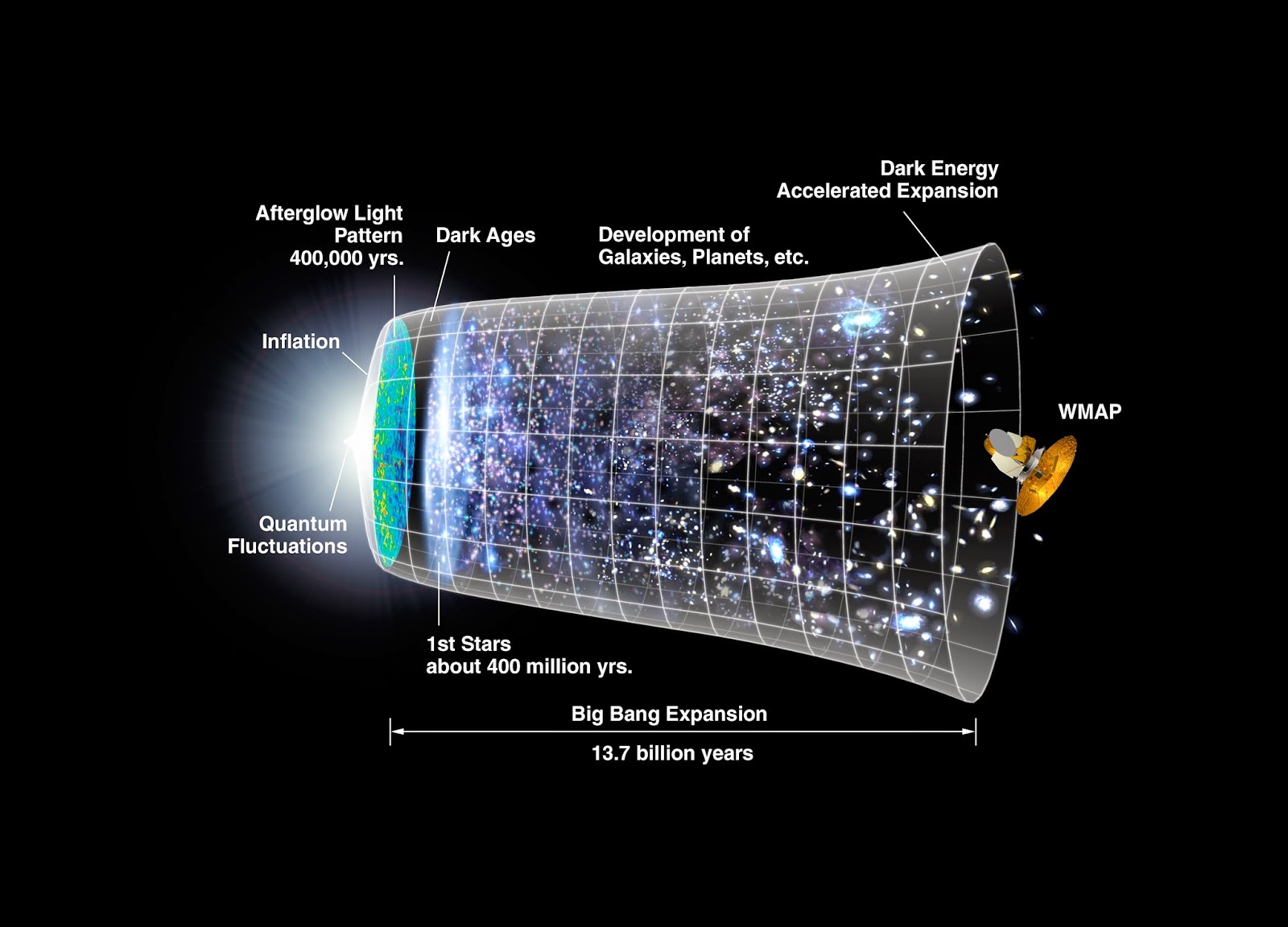
The universe is finite. Beginning from a single point in time as a constricted singularity of particles, dense and hot, and then expanding faster than the speed of light at the trillionth of a second following the Big Bang approximately 13.8 billion years ago, the universe is headed towards an end.

Stars turn into black holes, planets degrade and die, the fabric of the cosmos is ever being stretched apart by the accumulation of dark matter, and the expansion rate, after decelerating around 10.8 billion years ago due to the attractive gravitational pull of matter holding the myriad galaxies and solar systems together, has now begun to accelerate due to the repulsive gravitational push of dark energy.

Given the current knowledge of the expansion of the universe, it is an inevitable conclusion that the universe most certainly will end. As the universe expands ever faster, all of gravity's work will be undone. Clusters of galaxies will disband and separate. Then galaxies themselves will be torn apart. The solar system, stars, planets, and even molecules, quarks and atoms will be shredded down by the resultant consequences of the great cosmic phenomenon. The universe that was born in the Big Bang would end with the Big Rip: the end of all space and time and matter.


The ancient model of the endless, infinite universe has thus been proven to be false. A conceptual potential infinite aside, there can never quite be an actual infinite from a mathematical standpoint existing in the real world because the existence of an infinite number of anything leads to logical contradictions.

If the universe did not have a beginning, then the past would be infinite, that is, there would be an infinite number of past times. There cannot, however, be an infinite number of anything, and so the past cannot be infinite, and so the universe must have had a beginning, which we know as the phenomenon of the Big Bang.

Question: why do we say that an actual infinite is not realistically possible when concepts of a potential infinite exist? Proposition: Hilbert's Hotel. Hilbert’s Hotel is a hypothetical hotel with an infinite number of rooms, each of which is occupied by a guest. As there are an infinite number of rooms and an infinite number of guests, every room is occupied; the hotel cannot accommodate another guest. However, if a new guest arrives, then it is possible to free up a room for them by moving the guest in room no. 1 to room no. 2, and the guest in room no. 2 to room no. 3, so on. As for every room 'n' there is a room 'n + 1,' therefore, every guest can be moved into a different room, thus leaving room no. 1 vacant. The new guest can, then, be accommodated after all. This is clearly paradoxical; it is not possible that a hotel both can and cannot accommodate a new guest. Hilbert’s Hotel, therefore, is not possible.


Question: What if the scenario was applied to the concept of the past? Can we realistically have an infinite past? Answer: If there exists an infinite past and we were to assign a number to each moment in time of the past then every positive integer would be assigned to some moment. There would therefore be no unassigned number to be assigned to the present moment as it passes into the past. However, by reassigning the numbers and shifting them as such that moment no. 1 becomes moment no. 2, and moment no. 2 becomes moment no. 3, so on and so forth, we could free up moment number one to be assigned to the present. If the past is infinite, therefore, then there both is and is not a free number to be assigned to the present as it passes into the past.

That such a paradox results from the assumption that the past is infinite, it is claimed, demonstrates that it is not possible that that assumption is correct. The past, it seems, cannot be infinite, because it is not possible that there be an infinite number of past moments. If the past cannot be infinite, then the universe must have had a beginning. Once again, this we know as the Big Bang.


Another proposition to the unrealistic nature of an infinity is that it is virtually impossible to reach an infinite number mathematically by adding on to an already existing number. If one begins with a number, and repeatedly adds one to it, one will never arrive at infinity. If one has a heap of sand, and repeatedly adds more sand to it, the heap will never become infinitely large. Taking something finite and repeatedly adding finite quantities to it will never make it infinite. Actual infinites cannot be created by successive addition.

The past has been created by successive addition. The past continuously grows as one moment after another passes from the future into the present and then into the past. Every moment that is now past was once in the future, but was added to the past by the passage of time.

If actual infinites cannot be created by successive addition, and the past was created by successive addition, then the past cannot be an actual infinite. The past must be finite, and the universe must therefore have had a beginning.


Finally, we have the concept that actual infinites cannot be traversed.

If I were to set out on a journey to an infinitely distant point in space, it would not just take me a long time to get there; rather, I would never get there. No matter how long I had been walking for, a part of the journey would still remain. I would never arrive at my destination. Infinite space cannot be traversed.

Similarly, if I were to start counting to infinity, it would not just take me a long time to get there; rather, I would never get there. No matter how long I had been counting for, I would still only have counted to a finite number. It is impossible to traverse the infinite set of numbers between zero and infinity.

This also applies to the past. If the past were infinite, then it would not just take a long time to the present to arrive; rather, the present would never arrive. No matter how much time had passed, we would still be working through the infinite past. It is impossible to traverse an infinite period of time.

Clearly, though, the present has arrived, the past has been traversed.
The past, therefore, cannot be infinite, but must rather be finite.
The universe has a beginning.


The evident conclusion, therefore, is this: the universe, that is, all of space, matter and time, the past, the present and the future, everything, had a beginning. Mathematically and physically speaking, the universe is finite. And this does not only hold true for our universe but for any number of universes besides this one wherein we exist that all of them is finite and not endless. Thus, even the multiverse hypothesis fails to escape the result of this conclusion.

If all of space-time started from a united compact singularity of particles, smaller than an atom, even that could not have existed forever because its very constituents are finite and finite constituents cannot compose an infinite entity. Therefore, nothing within our immediate universe is truly infinite.

And since this very particle expanding to formulate the current universe itself is finite, it must have had a beginning and there must have been something to cause it to begin. This primal cause for the beginning of every particle must, on the other hand, be infinite and eternal or else it would, too, need a cause for its own existence and that would initiate a sequence of infinite regress. There has to be something at the very beginning of everything, therefore, that transcends the need for a cause and thus be eternal. The primal cause, hence, must be an entity of infinite actuality.

Also, as consequence of what we have established earlier, this entity has to exist outside our universe and outside the boundaries of time and space as we experience it within this realm because, as the three propositions prove above, an actual infinity within the boundaries of our time and space is impossible. Time itself is built on event progression, each moment chained to another constructing a train of events moving forward towards an end. Like the numbers of the addition or the sands of the heap, these events are finite and the sum total of the events, too, are finite.


Space, also, is constituted of particles which are finite with a beginning and an end. Overall, the entirety of our universe is limited and cannot allow for an actual infinity to exist within its bounds. Therefore, for an entity of pure infinity to exist, one that is eternal with endless power and capability, the entity must exist outside the boundaries of time and space to be limitless and unbound. And thus, this entity is quite evidently transcendent beyond physicality.

This entity in proposition is God. And the premises presented above explain His Attributes in the sense that He is Infinite, He is Omnipotent and He is Eternal. He is Transcendent, beyond the boundaries of time and space and thus He has no physical body because in order to have a body, even if it was not like that of His creation, a physical body would still need to be constituted of substance meaning God would thus occupy space since all substance, composed of matter, regardless of properties, occupies space, thus limiting God to the existence of space, meaning He could not exist before the creation of space nor the matter that constructs the frame of His body which consequently also means that God would require the creation of this matter first for existence thus obstructing His Eternal Nature.

And since we have already discussed that anything within the physical reality of our universe cannot truly be infinite, this would mean that God is not an actual infinite and His capabilities are, therefore, not limitless and unbound, His existence and nature, thus, not eternal. This would severely compromise the ontological property of God and reduce Him from the primal cause into an entity caused as well as the rest of His creation which does not quite solve the problem of the genesis of the cosmos nor explain the existence of God but rather create another issue all by itself.


In other words, a physical, literal body would mean, by definition of the word "physical," a body that is bound by the laws of physics, a body that is corporeal and, therefore, limited. Anthropomorphic theologians may try to avert this possibility by claiming God to have a body unlike that of His creation but that really does not solve anything because a deer possesses a body unlike that of a gazelle and a gazelle possesses a body unlike that of a blackbuck but, speaking in general terms, having a body unlike that of another does not mean the body is not a body. A literal body is still corporeal regardless of its likeness to another body of another species or person and a corporeal body is, by definition, composed of substance and matter. Therefore, a literal body is bound by space-time. This is problematic.

A god who is bound by the space-time fabric cannot be the creator of space and time; such a scenario would be as asinine and ludicrous as a daughter giving birth to her own mother, and would be no less preposterous as the universe basically creating itself and coming into existence. We cannot attribute such a phenomenon to God and claim it to be the rationale for His Existence. This is the fundamental flaw of a creed of an anthropomorphic, physical deity.


The God of the primal cause, therefore, cannot be a deity with a literal body. He must be transcendent. And He must also be beyond any attribution of direction, that is, He cannot exist anywhere above or below, in the right or the left, the north or the south, east or west of His creation. Directions exist in reference to the plane of space, that is, they are spatial constructs, as are length, height and weight.

There would be no weight if there were no object bearing mass and there would be no height, breadth or length if there were no object possessing dimensions to be measured using arbitrary units for the calibration of these sorts of dimensions comprehensible by the human mind. Similarly, direction is also a mechanical construct to pinpoint spatial location for guidance and homing. Without space, there would be no direction, and beyond space, there would be no such concept either. Since God exists beyond and before the creation of space, He cannot be attributed any direction.

Stating that God is physically above us would mean that He exists in a plane above ourselves meaning that He exists within a spatial construct of His Own leading to the problem, once again, of limiting God to the fabric of space-time. Where was He, then, before this fabric of space was created? Is this spatial plane eternal and infinite? How is it so?
If this space existed eternally with God then no-one created it meaning God is not the Creator of this space.
This space, therefore, is beyond His Dominion limiting, then, His Sovereignty.


We cannot have a God stated to be the Creator of the space-time fabric existing within spatial-time constructs. Therefore, we cannot say God exists literally above us in the spatial fabric similarly as we cannot say that God came to exist in the year 4,000,000 BC. These are measurements to calibrate space and time which did not exist before the creation of space and time, therefore, they do not apply to an entity existing infinitely before time and space.

It is for this very reason that we cannot say God literally descends from His Abode at a certain time of the day or night, that would mean that, for example, God exists 3,000 feet above Earth at 12 midnight and then later climbs down to an altitude of 1,000 feet above Earth at 3 am late-night. This means God is existing within time, His position in relation to Earth changing as the hours on the clock tick away. Such an entity, bound by spatial directional relatives and time cannot be infinite nor eternal, and it is, therefore, utter blasphemy to state such claims to be literal.

This also goes in relation to any of His Acts and Attributes in the sense that saying God is now Merciful or Forgiving while He was not so last year, etc. is equally blasphemous because that is evidently saying God changes in relation to time meaning He was of a certain nature at one point in time and then another nature in the next. God does not change relative to time. He exists beyond time. This explains the Eternal Nature of His Speech too.


God does not speak of an event as it unfolds. For example, if we take the biblical narrative of Moses being told to Muhammad in the Quran, the narrative is not being recorded by God as Moses goes through his life and actions meaning that God did not wait for Moses to arrive at Mount Sinai to speak to him through the Burning Bush and then record the narrative to then narrate it to Muhammad two-thousand years later. Once again, this would mean God exists within time and space. He does not. All those events have eternally happened from the viewpoint of God.

A good way to explain this with an example would be that of a time traveler, D, arriving at a museum around 10 AM in the morning. A security guard in the museum, B, receives a phone call from the same time traveler in the future asking him to move a painting from that museum to another location elsewhere. This evidently has not happened yet in the time traveler's own timeline when he first meets the security guard. It is after traveler D enters the museum, goes through a certain series of events within the next few hours and gets trapped in a predicament around 12 noon forcing him to call the security guard, B, in the past, at 10 AM, in B's timeline that the event happens in D's timeline. However, from the viewpoint of B, that event has already unfolded two hours ago. Time is subjectively relative.


Similarly, let us say God has already spoken to Moses at Mount Sinai and narrated the tale to Muhammad before either of the two were even born. They have yet to experience it happening in their own timeline but it has already happened in the grand picture of eternity. It is their temporal states which forces them to live through their lives until the point of that event happening in their own respective timelines. Such is the Eternal Nature of God's Speech.

In other words, everything that has happened and is ever going to happen, God has already witnessed. He is in the past, present and future all at once which is why He is aware of all our actions and deeds, what will unfold now, tomorrow and in the End of Days, these are events we have initiated to pass by our own free will but God allowed it.

He has seen everything that will happen and He has thus informed of it to His Prophets and Messengers who relayed the Message to us. These matters that we have been foretold of are not to be blamed upon God as they are of our own doing. God has simply willed our desires to happen manifest, witnessed it and warned us of it so that we know.


Since we have established the existence of God via exposition of the primal cause, it should do well to explain why certain trends within human culture to commune with God seem to overlap with one another. If this God is Eternal and He is Conscious then He must have caused the universe to be created for a reason and He must have conveyed that reason unto His creations throughout history. We must therefore experience that communication in our own timelines as we journey through our lives and understand the nature of reality better moving forward.

Thus, it would be quite natural to see similarities in the practices and beliefs of many faiths throughout the globe as faith and religion are the routes utilized to commune with God, therefore, when God communes with Man, the same methods of communication arise repetitively, though, in time, they are corrupted and changed but the skeletal remnants are left behind as relics and bridges between the belief systems of the many tribes and nations.

This is why there are so many similarities between beliefs and theologies throughout history and culture such as the obvious existence of an Almighty Creator God, an antithetical adversary in the form of the Devil or Angra Mainyu, Prophets and Avatars, the story of Noah and Manu, an End Times messianic figure, Judgement Day, Heaven/Hell, the Bridge or the Sirat to the Final Destination of the Soul, concept of Spirits and Afterlife, ritualistic prayer services throughout the day as seen in Zoroastrianism, Judaism and Islam, a Day of Divine Remembrance in the form of the Judaic Sabbath and Islamic Jummah, among many other examples of overlaps between religions existing globally across time. These are the ties that bind us together as humanity. These are the Echoes of God.


The very reason we cannot have a corporeal primal cause is also the reason that we cannot have multiple gods or elemental ones tied to natural phenomena and abstract mortal concepts such as death. This is because for there to be an eternal god of water the existence of the element water would have to be eternal and, similarly, for there to be an eternal god of fire the existence of the element fire would have to be eternal. We know neither is eternal.

Akin to that, the concept of death would also be non-existent in a world without anything to die so death could not have existed without life and thus the concept of death is also not eternal but an aftermath of the creation of life. Therefore, there can be no eternal god of death. These can, obviously, be extrapolated for any other polytheistic conceptual or elemental god. Without their reigning concepts or elements, they would simply be gods of nothing.

A pantheistic god also poses the same dilemma in the sense that a pantheistic god is basically everything in creation meaning that the pantheistic god came into being when creation came about and not before it. Thus, the universe itself is god and the universe, therefore, created itself and then, when the universe ends, god shall end, as it came to exist when the universe came to exist. Such a god is, by definition, limited and reliant upon the finite nature of the universe and not an eternal primal cause of it, as proposed by the cosmological argument, and has no need to exist.


An Eternal God, therefore, would simply have to be, He has to exist simply because to exist is His basal nature. He is not the god of something but rather something, anything, any concept or any element, is that which He creates by nature of His Creative Act, which, is immeasurable because anything being created from infinity is not measurable from the point of infinity to its creation. This means, we can say that the universe was created 13.8 billion years ago from today but we cannot say it was created, for example, 15 billion years after infinity. Time cannot be measured from an infinite. Time is a finite concept. Finite concepts cannot be measured from an infinite starting point.

In order to explain the aforementioned statements, let us say that I started a journey from infinity to get to a given point C. I cannot say I have a walked from infinity to point C. If my initial destination is an infinite distance away from point C, I would never get to point C since the distance is infinite and shall never end. Similarly, if the universe was created 15 billion years after infinity then that would mean the span of time between the beginning of the creation of the universe and the moment before it is infinite and thus impossible to traverse. This mathematical conundrum has already been discussed far above. Infinity cannot be traversed and arbitrated using a finite set of numbers.

This is why we cannot say when God started to create the universe. We can say it came to be 13.8 billion years ago. "When" is not a concept that can be used to describe God nor His Actions and Attributes, Similarly, "where" is also not a concept that can be used to describe God and His Actions and Attributes. God only and simply exists without a "when" or a "where" for He is Infinitely Eternal. He is Omnipotent. He is Immanent. He is Almighty. He is Forever.


— Promi